What is GHK-Cu, exactly?
GHK is a sequence of three amino acids, glycine, histidine, lysine, that's already in your body. Bound to a copper ion (Cu²⁺), it forms GHK-Cu, a small molecule that circulates naturally in human plasma and is released at sites of tissue injury. It's one of the most-studied small molecules in regenerative skin science.
GHK-Cu was first isolated in 1973 by biochemist Loren Pickart, who noticed that blood from younger donors was better at "rejuvenating" cultured liver cells than blood from older donors, and traced the activity to this tripeptide-copper complex. In the decades since, it has been studied in wound healing, hair, and dermatology, and adopted into topical skincare beginning in the 1990s.
You'll see it on ingredient labels as Copper Tripeptide-1 (the INCI name) or simply GHK-Cu.
How does it work?
GHK-Cu does several things at once, which is part of why it's so popular in formulation:
- It's a signal peptide. Like Matrixyl 3000, GHK binds to fibroblast receptors and signals support of structural proteins, collagen, elastin, glycosaminoglycans.
- It's a copper carrier. The copper ion is a cofactor for the enzyme lysyl oxidase, which the skin uses to cross-link collagen and elastin fibers. Free copper would be reactive and irritating; the GHK tripeptide acts as a gentle delivery vehicle that hands copper off where it's needed.
- It has antioxidant activity in laboratory studies, meaningfully more than many other small peptides, which is why it shows up in formulations aimed at the look of stressed, post-active, or barrier-disrupted skin.
This combination is why GHK-Cu is sometimes described as a "repair" peptide rather than a single-job firming or brightening one. It supports the look of multiple skin functions at the same time.
What does the research show?
GHK-Cu has one of the deepest research bases of any cosmetic peptide. A 2015 review in BioMed Research International (Pickart & Margolina) summarized the molecule's documented effects in published in-vitro and in-vivo studies: support of collagen and glycosaminoglycan production, modulation of inflammatory markers, antioxidant activity, and DNA-repair gene expression changes in skin cells.
Clinical studies in cosmetic dermatology, including those by Leyden and others, have reported visible improvements in fine lines, firmness, smoothness, and overall skin look after 12 weeks of topical GHK-Cu use, often comparable to vitamin C in similarly designed trials.
As with all cosmetic peptide research, claims in the United States are about the look of skin. GHK-Cu is not a drug; it's a topical cosmetic ingredient with one of the strongest evidence bases for visible support of repair-style outcomes.
Who is GHK-Cu for?
GHK-Cu is one of the most broadly compatible peptides. It works for:
- Post-active recovery, after retinol, AHA/BHA, or in-office treatments, when skin needs visible support without further disruption.
- Stressed, dull, "over it" skin, the kind that has been pushed too hard by actives and needs a calmer-looking phase.
- General firmness and bounce, for daily, full-face use as a long-term routine staple.
- People who already use retinol or tretinoin, copper peptides are commonly used on alternate nights or as the partner ingredient on retinol-free evenings.
How to use copper peptides, and what to avoid
The single most important rule is to avoid layering GHK-Cu directly with low-pH vitamin C in the same step. Acidic environments can destabilize the copper-peptide bond. The safe convention: vitamin C in the morning, copper peptides in the evening, or vice versa. They are not "incompatible", they just don't go on top of each other within minutes.
GHK-Cu pairs comfortably with niacinamide, hyaluronic acid, ceramides, and squalane. It can be used the same night as retinol if you wait a few minutes between steps, but most routines alternate them on different evenings for the gentlest experience.
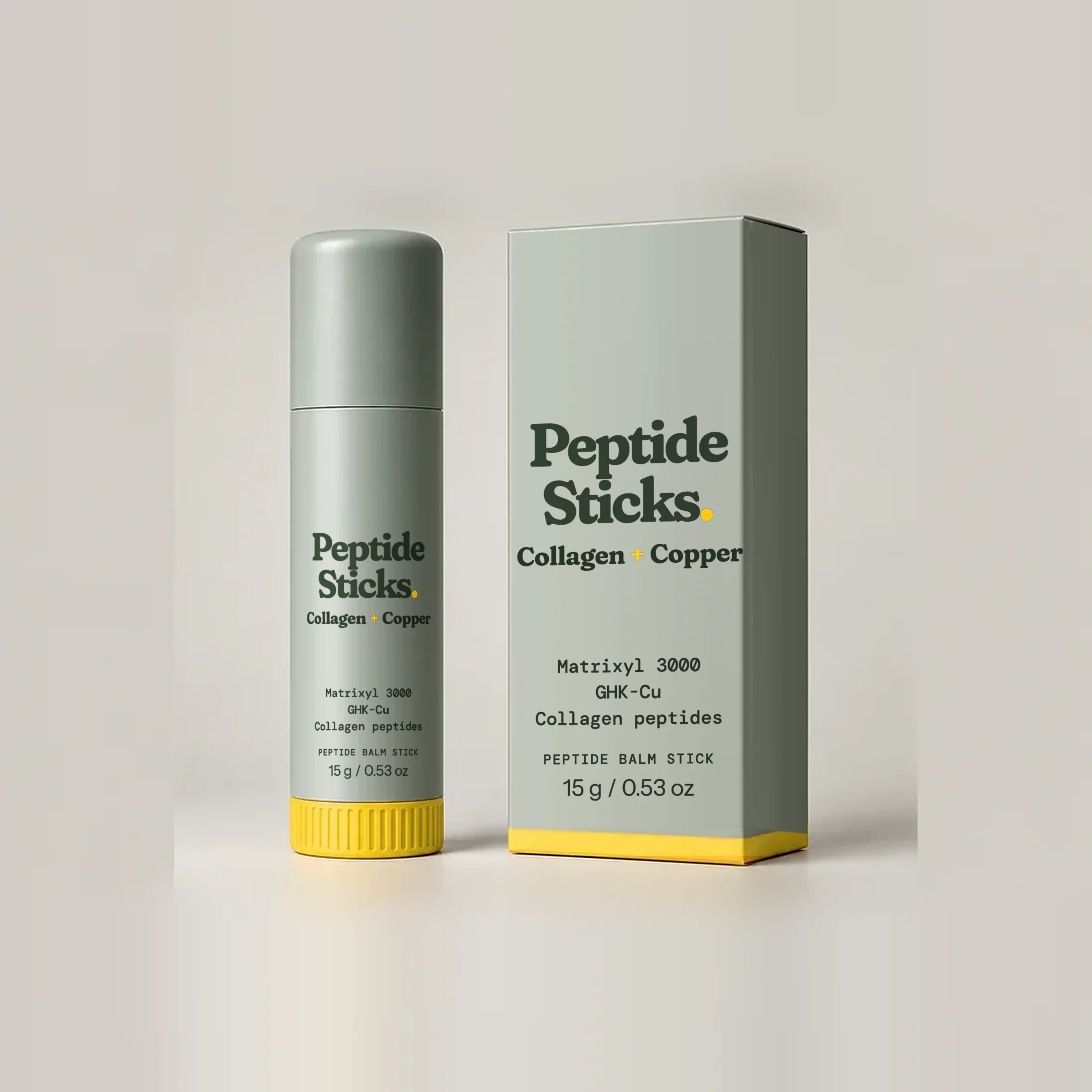
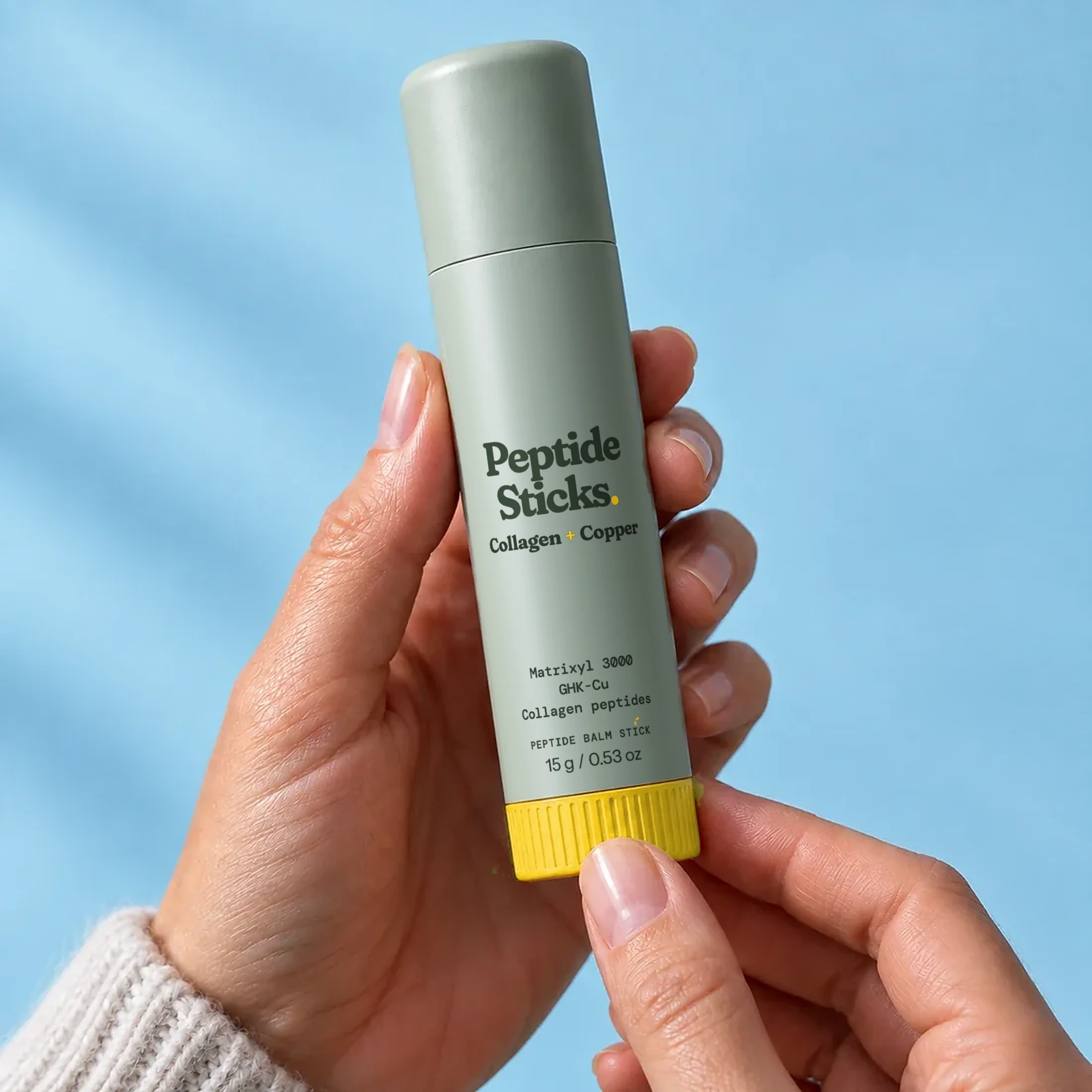
In a stick format like the Collagen + Copper stick, the clear, water free base sidesteps the pH issue entirely, there's no water for an acid to destabilize anything, and lets you apply a concentrated dose exactly where you want renewal: cheeks, neck, hands, or anywhere recovering from an aggressive active.
Common questions
Will copper peptides stain my skin?
No. The copper in GHK-Cu is bound at a microscopic concentration into a tripeptide complex. Topical copper peptides have been used in dermatology for decades without any documented staining at standard cosmetic concentrations.
Are copper peptides safe in pregnancy?
There is no published evidence of risk, and GHK-Cu is a naturally occurring molecule that's already in your body. Most dermatologists consider it pregnancy-friendly, but as with any active, ask your doctor.
Can I use GHK-Cu every day?
Yes. Daily use is the norm in both laboratory and clinical trials. Many people apply it twice daily.
What's the difference between GHK and GHK-Cu?
GHK alone is the tripeptide. GHK-Cu is the same tripeptide bound to a copper ion. The copper isn't decorative, it's essential to most of the biological activity. Products marketed as "copper peptides" should specify GHK-Cu or Copper Tripeptide-1 on the INCI list.