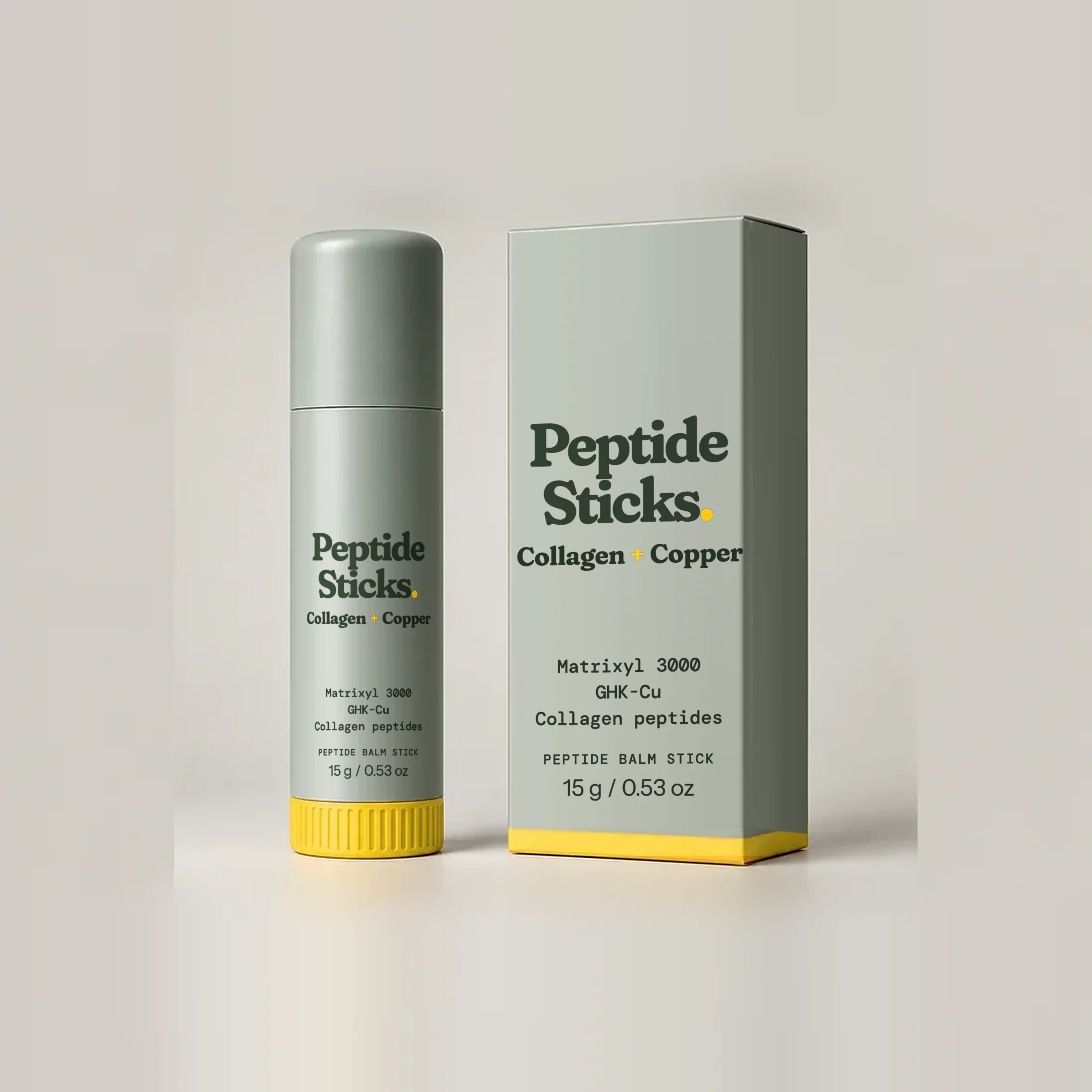
What is Matrixyl 3000, exactly?
Matrixyl 3000 is the trade name Sederma, a French cosmetic-ingredient supplier, uses for a fixed blend of two short peptide chains: Palmitoyl Tripeptide-1 (sometimes shorthanded as Pal-GHK) and Palmitoyl Tetrapeptide-7 (Pal-GQPR). Both are short peptides, just three to four amino acids linked together. Both have been attached to a palmitic acid "tail", a fatty-acid chain, so they can pass through the skin's lipid surface and reach the cells that build skin structure.
Pal-GHK is modeled on a fragment your body naturally releases when collagen breaks down, a tiny signal that tells the skin "rebuild this." Pal-GQPR is a synthetic peptide developed to calm the inflammatory signals that drive collagen breakdown. Combined, the two are designed to give a more complete "rebuild" signal than either does alone.
You'll often see Matrixyl 3000 confused with three related ingredients: Matrixyl (the original, just Pal-GHK on its own), Matrixyl Synthe'6 (a different peptide, Palmitoyl Tripeptide-38 plus glycerin), and Argireline (a totally different peptide that targets expression lines, not structural support). They are not interchangeable.
How does it actually work?
Peptides like Matrixyl 3000 are messengers. They don't add structural collagen to your skin the way a topical moisturizer can add lipids. Instead, they bind to receptors on fibroblasts, the cells in the dermis that produce collagen, elastin, glycosaminoglycans (including hyaluronic acid), and fibronectin, and signal those cells to ramp up their output.
The mechanism mimics one your skin already uses. When collagen in the dermis is damaged, the body cleaves the proteins into small peptide fragments, and those fragments themselves act as repair signals. A topical peptide with a similar shape can plug into the same signaling pathway, essentially nudging the skin to behave as if it's in repair mode.
The palmitic acid tail matters. Naked peptides are too hydrophilic to cross the stratum corneum efficiently; attaching a fatty acid creates a "lipopeptide" that slips through. That's why most useful peptides in skincare have "palmitoyl" or "myristoyl" in their INCI name.
What does the research show?
Matrixyl 3000 has been studied by Sederma in both in-vitro (laboratory-cultured skin cells) and in-vivo (human volunteer) trials since 2003. The supplier-published data shows increases in the production of Collagen I, Collagen IV, hyaluronic acid, and fibronectin in fibroblast cultures, alongside visible reductions in wrinkle depth in user trials over 8-12 weeks.
Independent peer-reviewed reviews of cosmetic peptides, including reviews in The International Journal of Cosmetic Science and Skin Pharmacology and Physiology, have consistently included Matrixyl 3000 among the small group of peptides with the most supportive evidence for visible firmness and wrinkle-appearance outcomes. The evidence base is not as deep as for retinoids, but it is one of the strongest for the peptide category.
Important honesty note: peptide claims in cosmetics in the United States are always about appearance. A topical peptide is not a drug; it doesn't penetrate as deeply as a prescription retinoid and it cannot make permanent structural changes. What it can credibly do is improve visible firmness, bounce, and the look of fine lines with consistent use.
Who is Matrixyl 3000 for?
Matrixyl 3000 is one of the few peptides that's appropriate for nearly every skin type and most ages. It is well-tolerated by sensitive skin, it doesn't cause photosensitivity, and there's no published evidence of an interaction with hormonal status, so it's used by people who avoid retinol during pregnancy (we still recommend asking your doctor).
It's most often recommended for:
- Anyone in their late 20s or older who wants a low-irritation way to start a "firmness" routine.
- Skin that's lost some bounce or cushion, smile lines, cheek hollows, jawline softening.
- People who can't tolerate retinol but still want a credible age-support active.
- People who already use retinol and want a daily, gentler partner ingredient.
How to use Matrixyl 3000 in your routine
Matrixyl 3000 layers well with almost everything. The general rule for peptides is to apply them onto clean, slightly damp skin and let them sit before heavier occlusives like creams or oils. A typical evening routine might be: cleanse → vitamin C or skincare stick → retinol (if used) → moisturizer. In the morning, peptide → SPF.
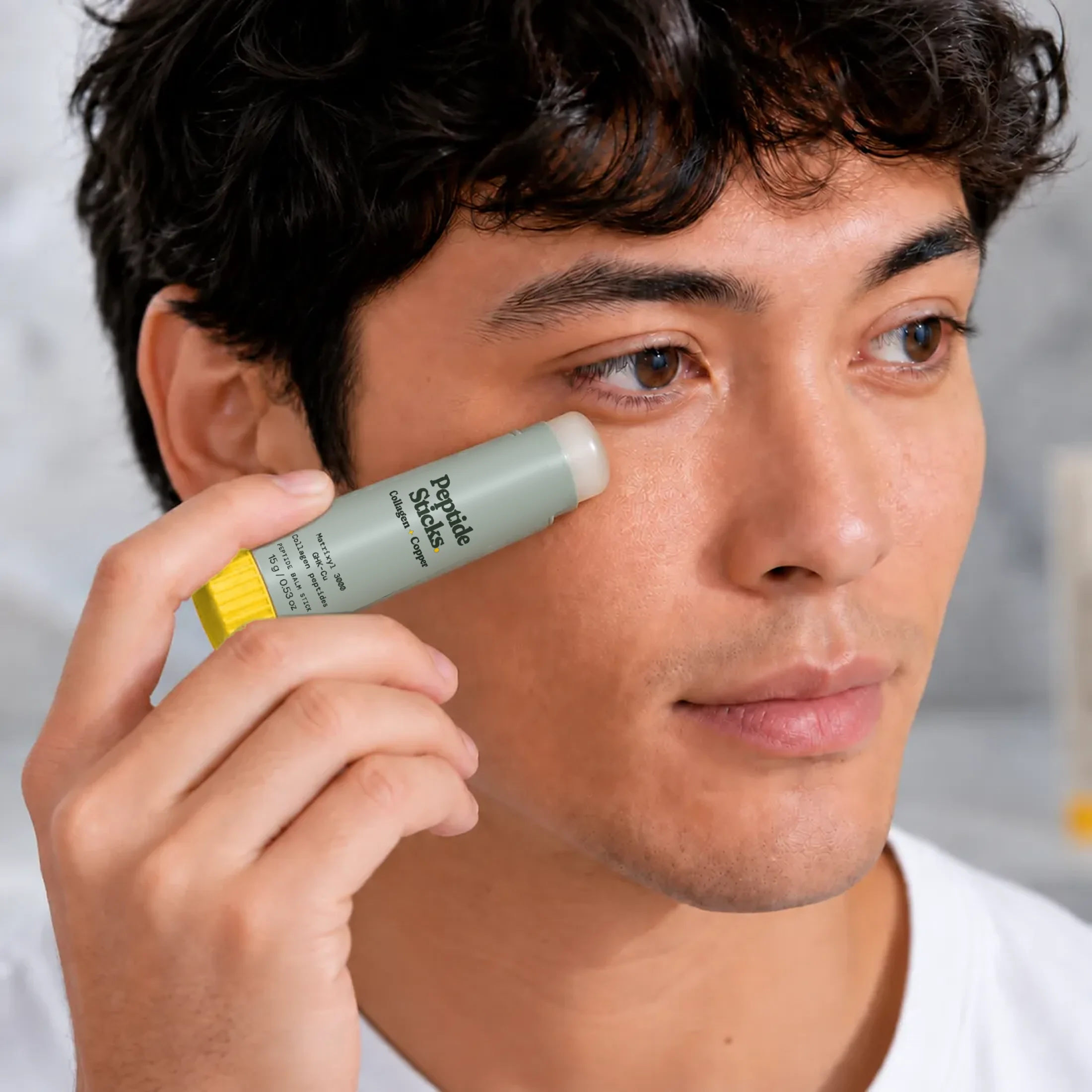
If you're using a stick format like the Collagen stick, you're already getting a controlled, concentrated dose right on the area that needs it, under the eyes, smile lines, jawline, or neck, without diluting it across the entire face.
Common questions
Is Matrixyl 3000 better than retinol?
It's a different tool. Retinol forces cell turnover; it works fast and visibly but often at the cost of irritation, dryness, and barrier disruption. Matrixyl 3000 signals support of structural proteins without disrupting the barrier, it works more slowly and more gently. Many of the strongest modern routines use both: peptides daily, retinol 2-3 evenings a week.
Can I use it with vitamin C?
Yes. Low-pH L-ascorbic acid was once thought to deactivate peptides, but in practice the two are commonly used in the same routine, usually with vitamin C in the morning and the peptide in the evening, or layered with a brief wait between them. In water free stick formats, the pH issue largely doesn't apply.
How long until I see results?
Peptide trials typically report visible changes after 4-8 weeks of consistent daily use. Skin renewal is slow. If you don't see a difference at the 8-week mark, the peptide is probably not the right one for your concern, but it isn't doing harm in the meantime.
Is Matrixyl 3000 safe in pregnancy?
There is no published evidence of risk, and many dermatologists consider it pregnancy-friendly because it's a signal peptide rather than a hormonally active or systemically absorbed ingredient. As with any active, ask your doctor first.