What is a retinyl-peptide complex?
A "retinyl-peptide complex" isn't a single trade-name ingredient, it's a formulation pattern that has become standard in modern overnight skincare. It pairs three categories of ingredient that complement each other:
- An encapsulated retinoid, usually retinal (retinaldehyde) or low-dose retinol, protected inside a microcapsule for stability and slow release.
- Bakuchiol, a plant compound that has been studied as a layer-friendly partner to retinoids, with no UV-sensitivity profile.
- Smoothing peptides, most commonly Palmitoyl Tripeptide-1 (Pal-GHK), the same Matrixyl-family peptide that supports the look of firmer skin.
This combination is increasingly common because each ingredient covers a weakness of the others. Encapsulated retinoids are stable but slow; bakuchiol adds layer-friendly retinoid-style benefits without irritation; peptides handle the support-of-firmness signaling that retinal does less of on its own.
What's the difference between retinol and retinal?
This is one of the most-confused points in skincare. The retinoid family has a fixed conversion ladder:
Retinyl esters → Retinol → Retinal (retinaldehyde) → Retinoic acid
Only retinoic acid is biologically active in the skin, it's the form that binds to receptors and changes cell behavior. The further left you go on the ladder, the more conversion steps your skin needs to perform, and the slower (and gentler) the effect.
Retinal is one step closer to retinoic acid than retinol is, so it can deliver similar visible results at a similar concentration faster. Many people find it less irritating than retinol because they can use a lower percentage to get the same effect.
Tretinoin and adapalene, the prescription retinoids, are essentially "retinoic acid" already, which is why they work fastest and irritate most.
Why encapsulation matters
Vitamin A in all its forms is famously unstable. Open a serum, expose it to air, leave it in a clear bottle, and the retinoid degrades within weeks. Encapsulation, sealing the retinoid inside a tiny lipid or polymer capsule, solves three problems at once:
- Stability. The retinoid is protected from air and light.
- Time-release. The capsule slowly breaks down over the night, releasing the retinoid gradually instead of all at once.
- Reduced irritation. Slow release means lower peak concentration in the skin at any moment, which means less redness and flaking.
In a water free stick format, encapsulation is even more effective because there's no water to start breaking down the capsule before application.
Where does bakuchiol fit in?
Bakuchiol is a compound found in the seeds of the Indian plant Psoralea corylifolia. A 2019 study in the British Journal of Dermatology compared bakuchiol against retinol in a 12-week head-to-head trial and found comparable visible improvements in wrinkles and pigmentation, with significantly less scaling and stinging.
Importantly, bakuchiol is not a retinoid, it doesn't work through the retinoic-acid receptor pathway. It appears to support similar skin-look outcomes through different signaling. That's why pairing it with a low-dose encapsulated retinoid is so effective: you get two complementary mechanisms with much less of the total irritation either would produce alone.
Bakuchiol also has no documented UV sensitization, so it's safer than retinol if any morning residue might be left on the skin.
Who is a retinyl-peptide complex for?
- Anyone who's tried retinol and quit because of irritation, redness, or peeling.
- Beginner retinoid users who want results without the standard 2-week "purging" or uptitration phase.
- People already on tretinoin who want a gentler product on off-nights.
- Anyone looking for a single overnight product that does turnover, peptide support, and barrier-friendly hydration in one step.
How to use it
Apply in the evening to clean, dry skin. Layer moisturizer on top if you need extra hydration. SPF the next morning is still recommended, even a gentle retinoid can sensitize skin slightly to UV, and SPF is the rule for retinoid-using skin regardless.
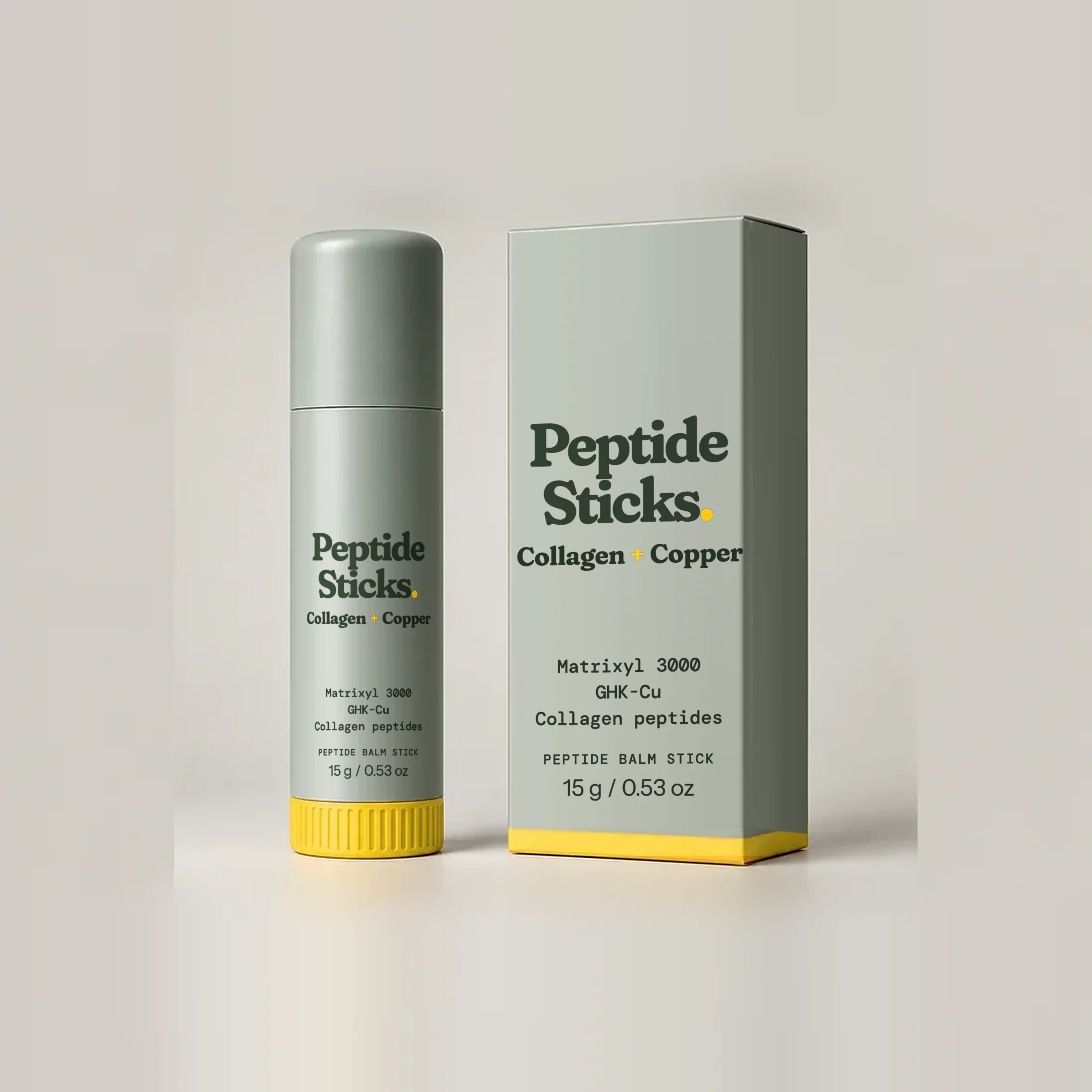
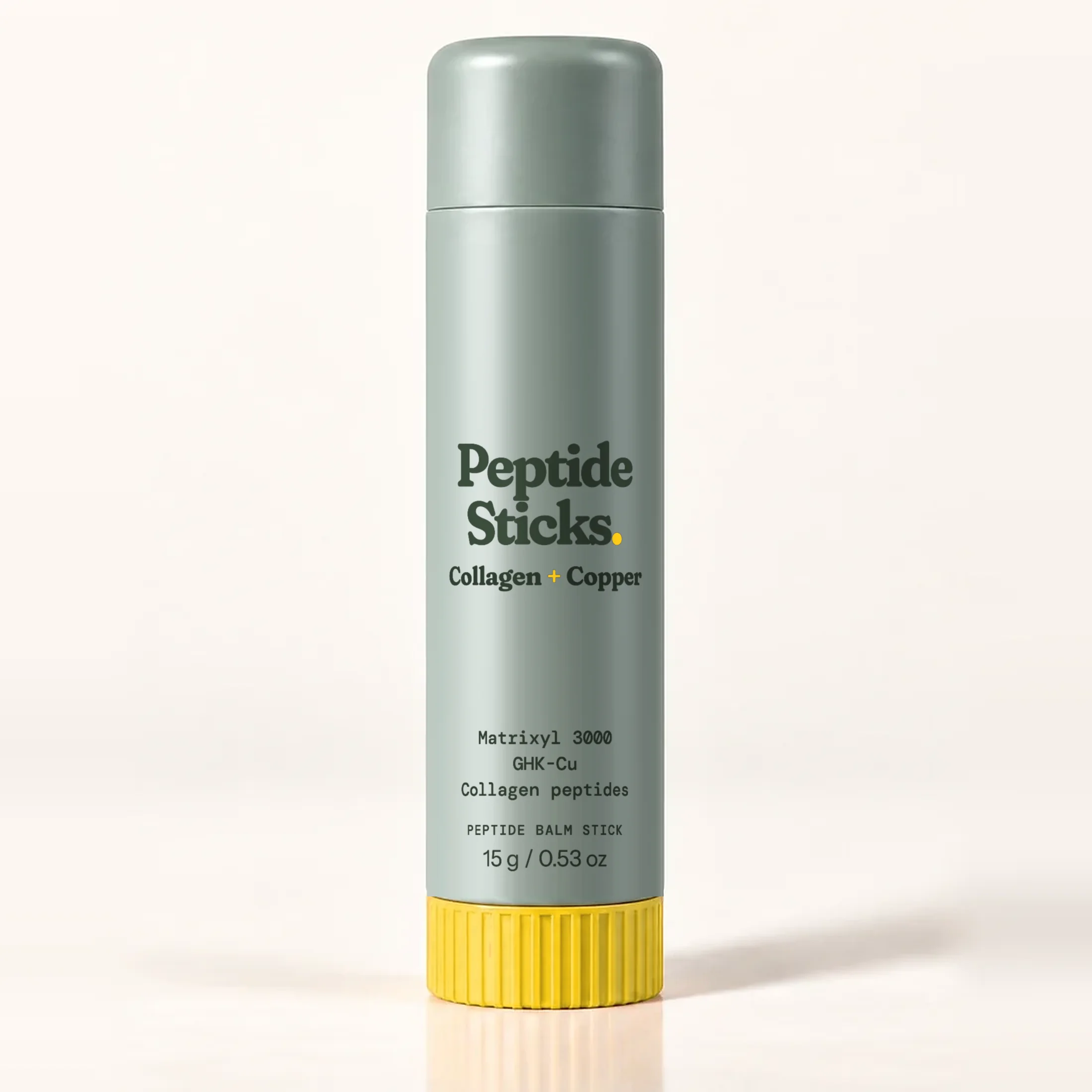
Don't use it on the same night as a strong AHA/BHA exfoliant. Don't combine with prescription tretinoin (you don't need both). Layering a peptide stick like Collagen + Copper in the morning is a great way to support the skin between overnight applications.
In a stick format, the clear, water free format protects the encapsulated retinoid until the moment it touches skin, and the targeted application lets you skip thin, sensitive areas like the immediate eye lid.
Common questions
Will I purge?
Encapsulated, low-dose retinyl-peptide complexes have a much milder purging profile than starting on a high-percentage retinol. Most users report some texture changes in the first 2-3 weeks, not a full breakout phase.
Can I use it during the day?
No. Retinoids break down in UV. Evening only.
Is it pregnancy-safe?
No. Retinoids, including the encapsulated retinal in this kind of complex, are generally avoided during pregnancy and breastfeeding. Use a peptide-only formula during that window.