What causes dry patches
- Weather. Cold, wind and low humidity pull water from the skin.
- Hot water and harsh cleansers. Both strip the oils that hold moisture in.
- Too many actives. Acids, retinoids and scrubs used together can leave flaky, tight spots.
- Friction. Masks, scarves, shaving and blowing your nose all wear at the same few areas.
Why spot treating works better
Most faces are combination: an oilier center and drier edges. A rich cream all over can feel heavy on the oily parts, while a light lotion leaves the dry spots tight. Treat the patches on their own with a richer layer, and keep the rest of your routine light.
The dry patch routine
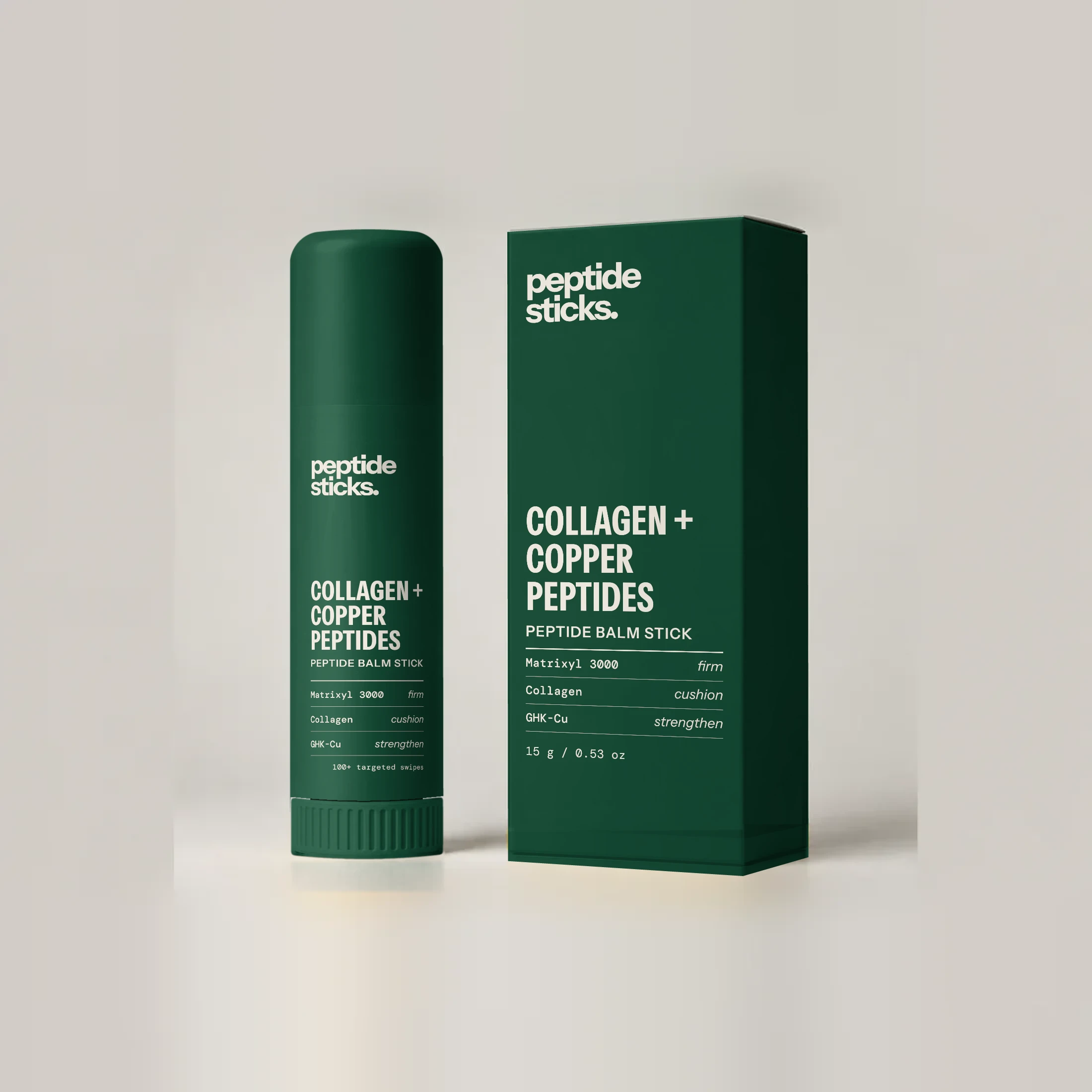
Morning: gentle rinse, the stick over dry patches, moisturizer, SPF.
Night: mild cleanser, the stick on patches, a second thin layer on the driest spot, moisturizer.
What to look for
Humectants such as glycerin and collagen peptides draw water in. Emollients and occlusives such as plant oils and waxes slow its escape. A water-free stick gives you a concentrated layer with nothing to evaporate. Peptides are gentle enough to keep using while skin is stressed, unlike strong acids or retinoids.
How to build layers
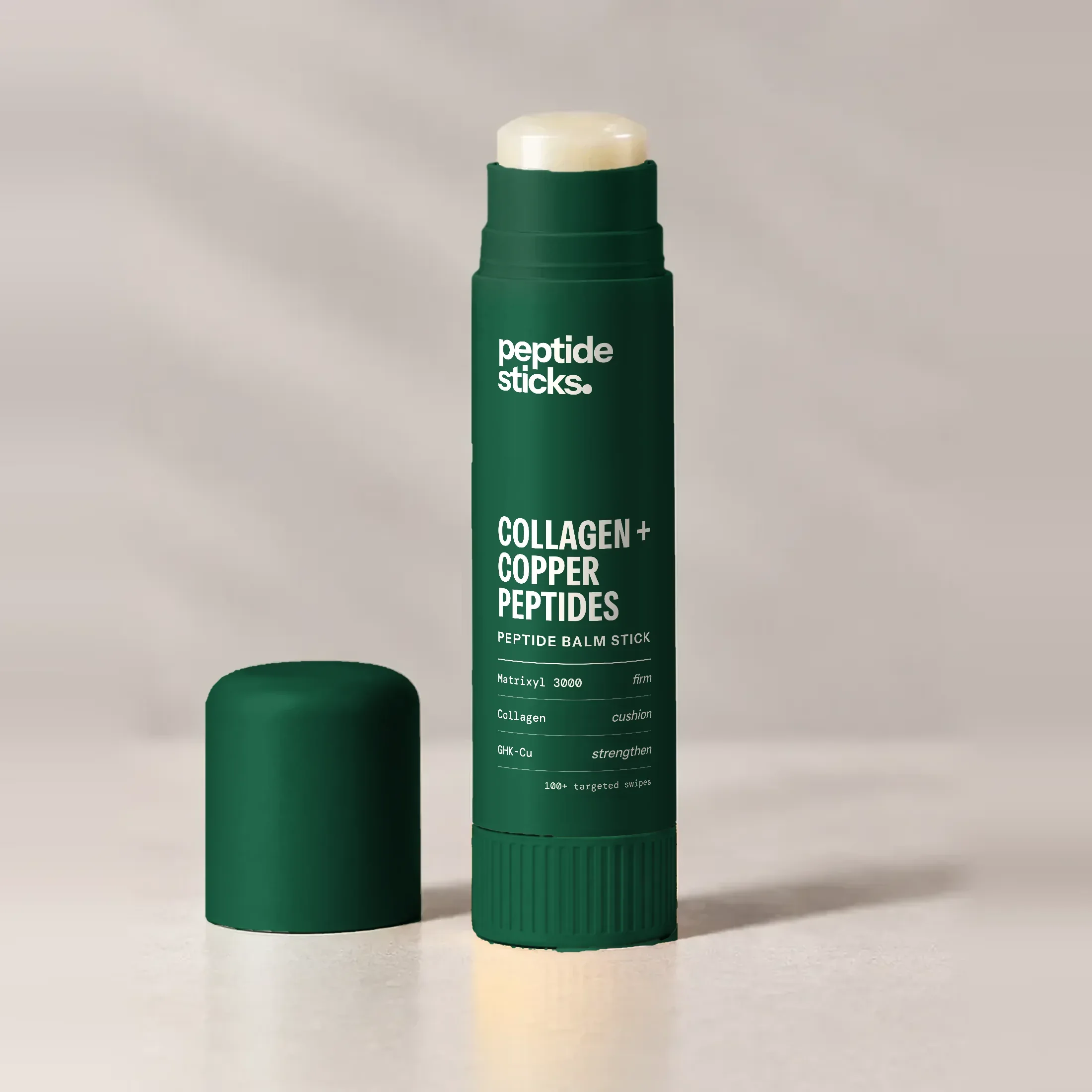
Swipe once and press for a few seconds. Wait a minute, then swipe again only on the spots that still feel tight. Two thin layers sit better than one thick one, and they’re less likely to pill under makeup. Follow with moisturizer, and sunscreen in the morning. See how to layer without pilling if you wear makeup over it.
Dull skin is often dry skin
Hydrated skin is smoother and reflects light evenly. Dry skin scatters light and looks flat. Fixing dryness is often the quickest route to brighter-looking skin, before you reach for exfoliants.
When to see a dermatologist
Patches that are red, scaly, itchy, spreading, or still there after two weeks of gentle care may be eczema, psoriasis or seborrheic dermatitis. Those need a diagnosis and sometimes prescription treatment.
The bottom line
Treat dry patches gently and locally. Fewer actives, cooler water, and a richer layer only where you need it. Most patches settle within a week or two.