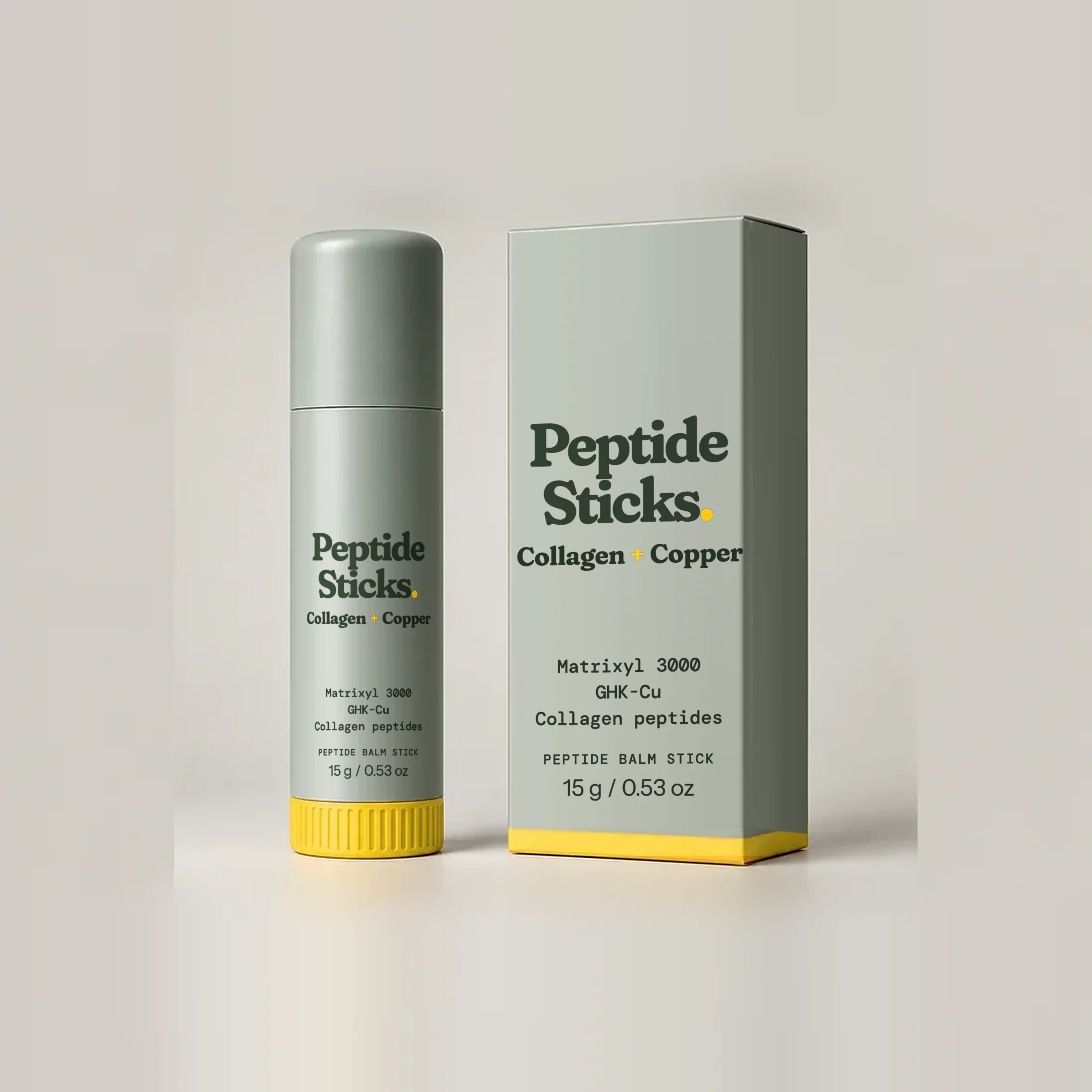
What is a peptide serum stick?
A peptide serum stick is a twist-up solid that delivers the actives you would normally get from a bottled serum, without the dropper and without water. You swipe it onto the area you want it and press it in. Unlike a traditional balm, it is tuned to feel light and settle quickly, so moisturizer, sunscreen, or makeup can go over the top.
The name is doing real work here. "Serum" signals the intent, which is a concentrated, treatment-level dose of actives. "Stick" signals the delivery, which is precise and touch free.
What the stick fixes about the bottle
Liquid serums are a good idea with three annoying problems, and the stick solves all three.
- Dosing waste. A dropperful spreads across the whole face by default. Most people do not need treatment-level actives on every square centimeter. A stick lets you put the dose on smile lines, the jaw, or the neck and leave the rest alone.
- The dropper itself. Glass pipettes go back into the bottle after touching skin, and every open-and-close exchanges air with the formula. A sealed stick you twist up has no headspace problem and nothing to contaminate.
- Travel. A solid does not count as a liquid, does not leak into a bag, and does not need a decant.
Where the bottle still wins
If you want a thin, even veil of actives across your entire face, a liquid serum spreads more evenly and more quickly than any stick. Sticks are for targeting. Bottles are for coverage. Plenty of routines have room for both.
Why water free matters
Most bottled serums are mostly water. That is not automatically bad, but it has consequences: water is what microbes need, so the formula needs a fuller preservative system, and a meaningful share of what you paid for is the solvent.
Taking the water out gives peptides a calmer environment and lets the ingredient list stay shorter. The trade-off is texture. A water free formula has to be engineered carefully or it feels greasy, and that engineering is exactly what separates a real serum stick from a balm with a serum label. If you want the richer, more occlusive end of this format, read our guide to the peptide balm stick.
How to use a peptide serum stick without pilling
- Start on clean, slightly damp skin. Damp skin helps the stick glide and spread further.
- Twist up only a couple of millimeters. Overapplication is the single most common cause of pilling.
- Swipe once over the target area. Smile lines, forehead, jaw, neck, chest, the backs of the hands. Around the eyes, stay outside the orbital bone.
- Press, do not rub. Warmth from your fingertips settles the formula without dragging.
- Wait about a minute before the next layer. This one step prevents most pilling complaints.
- Moisturizer, then SPF in the morning. A serum stick is a treatment step, never a sunscreen.
For the full order of operations, including retinoids and exfoliating acids, see how to layer a targeted skincare stick.
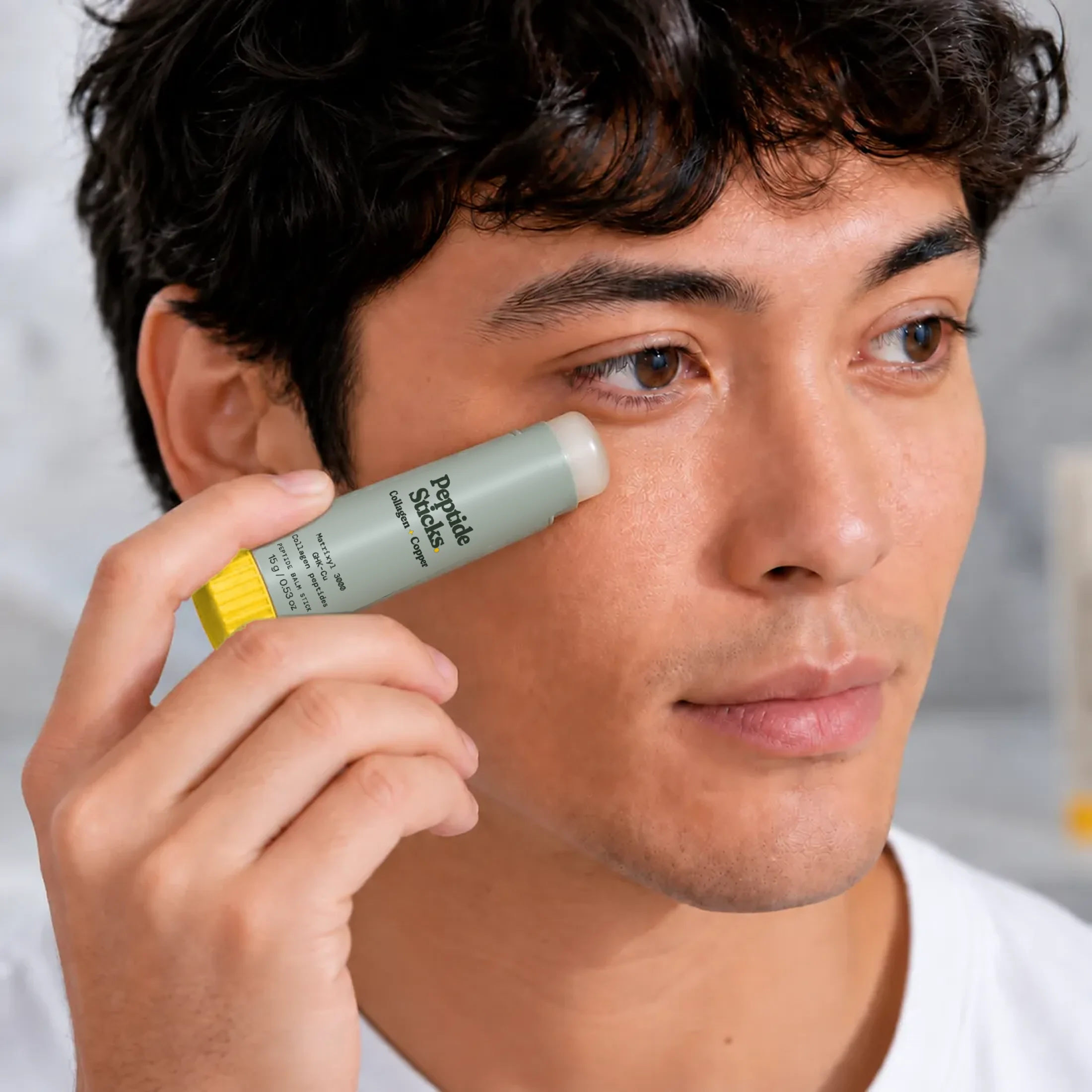
What to look for when comparing serum sticks
- A named peptide. Matrixyl 3000 and GHK-Cu have published research behind them. "Peptide complex" with no names is a marketing choice, not a formula.
- Position in the ingredient list. A peptide below the fragrance is a peptide in a rounding error.
- Heat stability. Sticks live in bags and cars. Ask whether the base was cycled through heat and cold, and treat a greasy film on the surface as a warning.
- Clear, not tinted, unless you want a tint. Clear layers under anything.
- No added fragrance. You are pressing this into the most reactive parts of your face.
Match the peptide to the concern
- Firmness and fine lines: Matrixyl 3000.
- Renewal and barrier support: GHK-Cu copper peptides.
- Visible calm in reactive skin: Palmitoyl Tripeptide-8.
- Uneven tone: Oligopeptide-68.
- Under-eye puffiness: Acetyl Tetrapeptide-5.
Our full matching guide is here: which peptide for your concern.
Honest expectations
Peptides are well tolerated and gentle, which is a real advantage for people who cannot handle retinoids. They are also gradual. Give a firming or tone peptide eight to twelve weeks of daily use before you judge it, and photograph your starting point in consistent light. A serum stick will not out-resurface a retinoid and it will never replace sunscreen. For the evidence behind the category, read do peptides actually work, and if you have seen peptides discussed in a very different context, topical vs. injectable peptides clears that up.
The bottom line
A peptide serum stick is the right buy when you want treatment-level peptides placed deliberately, layered under the rest of your routine, and carried without a leak risk. Judge it on the named peptide, its position in the list, and whether the base was built to feel light and survive a warm day. Then use it every day for three months.