Why skin looks looser after weight loss
Skin stretches to cover whatever sits beneath it. When fat underneath shrinks, the skin has less to cover, and it needs time to adjust. On the face and neck, where skin is thin and always on show, that adjustment is easy to see as softer contours, deeper folds, or a crepey look on the neck.
Skin’s ability to adjust depends on two proteins: collagen, which gives it strength, and elastin, which lets it spring back. Both decline with age and with sun exposure, which is why the same weight loss can look very different on two people.
Does it bounce back?
Often somewhat, and slowly. Skin keeps remodeling for months after your weight settles, so judge the result after things have been stable for a while rather than mid-journey. The factors that help most are ones you mostly can’t change after the fact:
- Age. Younger skin has more collagen and elastin to work with.
- Amount and pace. Smaller and slower losses give skin more time to adapt.
- Sun and smoking. Both break down the proteins that let skin recover.
- Genetics. Some people’s skin is simply more elastic.
If you are losing weight with medical help, your clinician can talk with you about pace and nutrition, including protein, which affect how your body adjusts overall.
What skincare can and can’t do
Skincare works on the quality of the skin: how firm, smooth, even and hydrated it looks. It does not remove skin, and it does not tighten the way surgery or in-office devices do. Any product that promises to “erase” loose skin is overpromising.
Within those limits, a routine is worth doing. Firmer-looking, well-hydrated skin catches light better and looks healthier, and protecting it from the sun keeps things from getting worse while your skin adjusts.
The three steps that matter most
Sunscreen every morning, face and neck.
A targeted step at night: a peptide, a retinoid, or both on alternate nights.
Moisturizer to keep skin soft and comfortable.
Choosing a targeted step
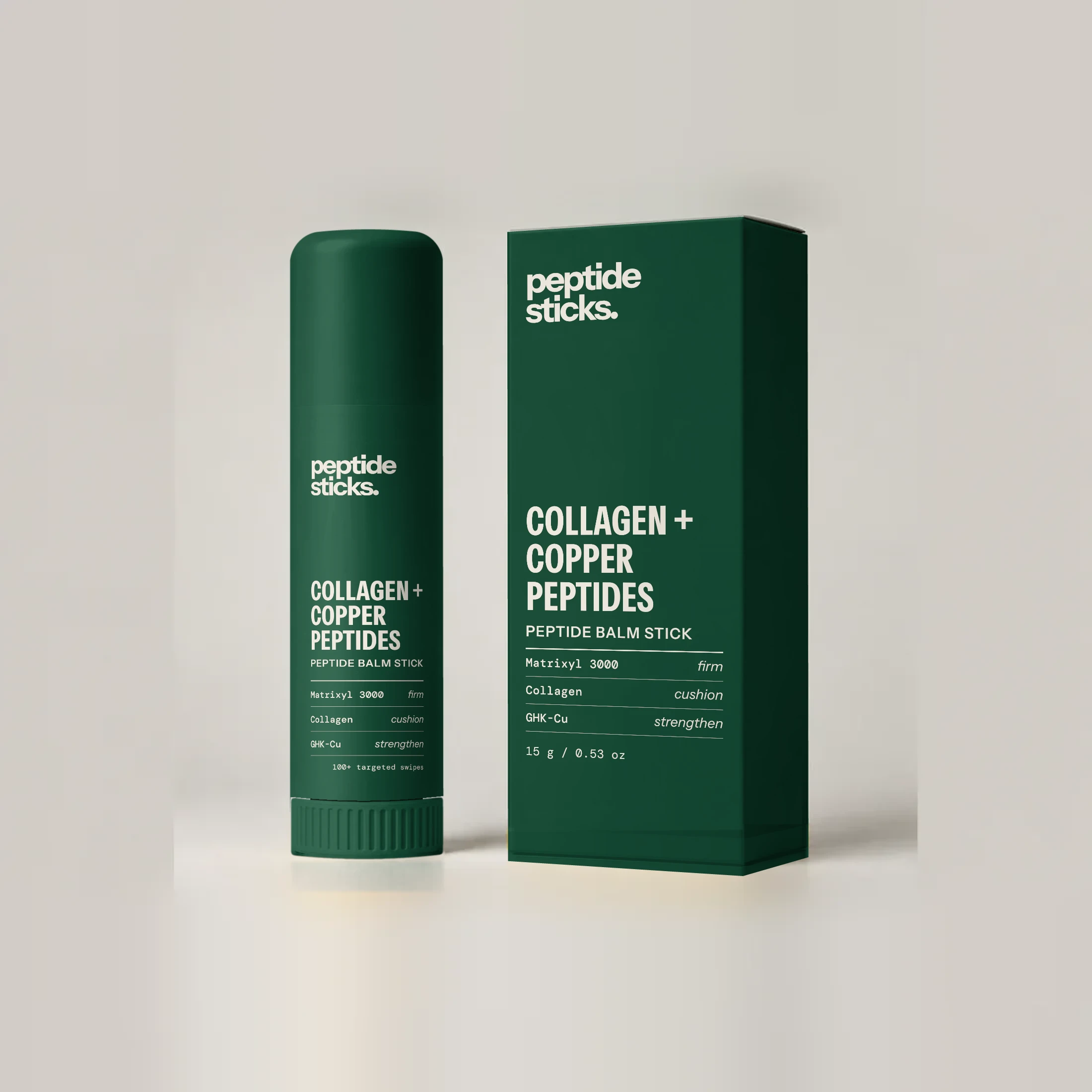
Retinoids have the deepest evidence for texture and fine lines, but they can sting and peel, so start two or three nights a week. Peptides are gentler and suit sensitive skin. Look for named ones: Matrixyl 3000 and GHK-Cu are among the best studied for the look of firmer, smoother skin, with results reported over 8 to 12 weeks. Many people use both: our guide to peptides vs. retinol explains how.
Give the neck the same care
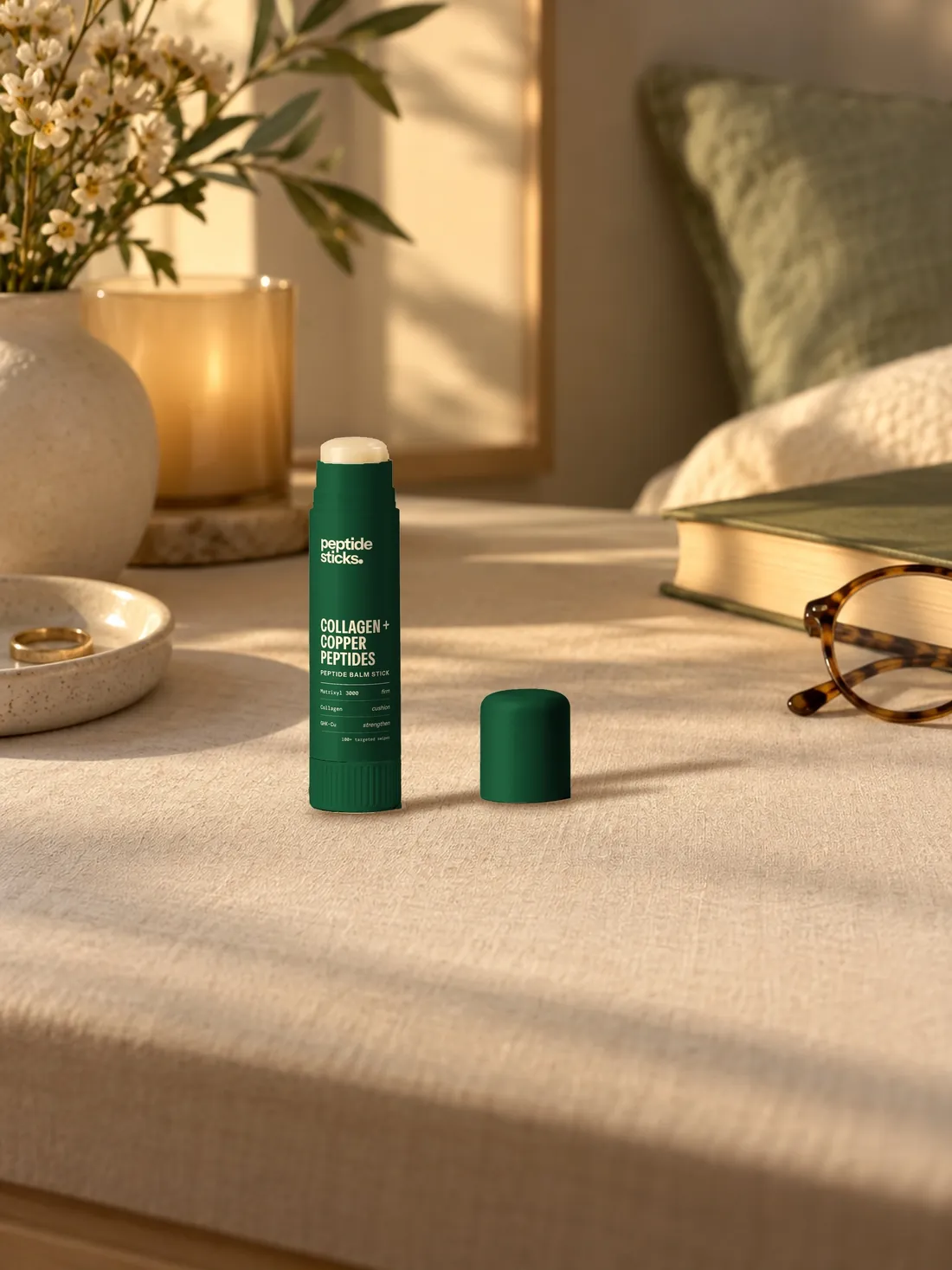
The neck is where many people notice change first, and it is the area most routines skip. Its skin is thinner than the face and has fewer oil glands, so it dries out and shows lines sooner. Take your sunscreen and your targeted step all the way down to the collarbone, using light upward strokes. A twist-up stick makes this a few seconds’ work, with nothing left on your hands.
When to see a professional
If loose skin bothers you or affects how you feel day to day, see a board-certified dermatologist or plastic surgeon. Radiofrequency and ultrasound devices, microneedling, injectables and surgery are all options they may discuss, with very different costs, recovery times and results. Those are medical decisions, and a skincare brand shouldn’t be the one making them for you.
The bottom line
Skin adapts to weight loss slowly and to different degrees. A simple routine of sunscreen, a peptide or retinoid step, and moisturizer, carried down to the neck, helps it look its best while it does. Give any new step 8 to 12 weeks, and talk to a professional about anything a routine can’t reach. If you are losing weight on a GLP-1 medicine, our guide to skincare during GLP-1 weight loss goes further.