First: they are not versions of the same thing
Retinol is a vitamin A derivative. In skin, retinol converts to retinal, then to retinoic acid, the active form that binds to retinoid receptors. That pathway is why retinoids have such strong evidence for the look of refined texture, fine lines, pores, and breakouts.
That same pathway is also why retinol can be difficult. It increases turnover, and skin often complains while it adjusts: dryness, tightness, peeling, and stinging. Sometimes that push is exactly what you want. Sometimes it is too much.
Peptides are short chains of amino acids. They do not convert into retinoic acid and they do not work through the same turnover pathway. Specific peptides are used as signals, carriers, or targeted support ingredients. One peptide may be used for the look of firmness, another for visible calm, another for tone, another for under-eye puffiness.
So the better question is not "Are peptides better than retinol?" It is: what outcome are you trying to get, and how much irritation can your skin tolerate on the way there?
The evidence in plain English
Retinoids have the deepest body of evidence in cosmetic dermatology. Prescription tretinoin sits at the top of that family, but over-the-counter retinol and retinal also have useful data behind them. If your main goal is smoother-looking texture, fine lines, and photoaging support, retinoids are the benchmark.
Peptides are more varied. Some have meaningful published research; some mostly have supplier data; some are better understood as nice supporting ingredients than true hero actives. The peptide category is not weak, but it is uneven. You have to judge the named peptide, not the word "peptide."
That is why we like peptides with specific use cases: Matrixyl 3000 for firmness, GHK-Cu for renewal and barrier support, Palmitoyl Tripeptide-8 for visible calm, Oligopeptide-68 for uneven tone, and Acetyl Tetrapeptide-5 for under-eye puffiness.
Head-to-head by skin goal
For the look of fine lines and refined texture
Retinol wins on evidence. Nothing else in the cosmetic aisle has retinol's depth of research for texture and fine lines. Peptides, especially Matrixyl 3000, can support the look of smoother, firmer skin, but the effect is usually more gradual and subtle.
The practical answer: if your skin tolerates retinoids, keep one in the routine. Add peptides for support, not as a direct replacement.
For tolerability
Peptides win. Most peptide formulas do not require a tolerance ramp. They are easier to use daily and less likely to trigger peeling, stinging, or barrier drama. That makes them especially useful for people who want visible-skin support but do not want to negotiate with their face every night.
Retinol can absolutely be used by sensitive people, but the margin for error is smaller. Strength, frequency, moisturizer, cleanser, weather, and your skin's current stress level all matter.
For calming reactive skin
Peptides win clearly. Retinol can be useful long-term, but it is not a calming step. If skin is flushed, sensitized, over-exfoliated, windburned, or angry from too many actives, retinol is usually the wrong tool that night.
A calming peptide like Palmitoyl Tripeptide-8, especially with panthenol, cica, ceramides, and a lipid-rich base, fits the moment better. This is where a recovery routine beats an ambitious one.
For brightening
It depends on the kind of discoloration. Retinol can improve the look of uneven tone through turnover, especially when dark marks are tied to texture and old congestion. Brightening peptides like Oligopeptide-68 are more directly aimed at the pigment pathway and pair well with niacinamide and tranexamic acid.
If your main issue is post-blemish marks or uneven tone and retinol irritates you, a peptide-led brightening routine is a smart route. If you tolerate retinol well, using both can make sense: brightening support in the morning, retinoid at night.
For under-eye puffiness
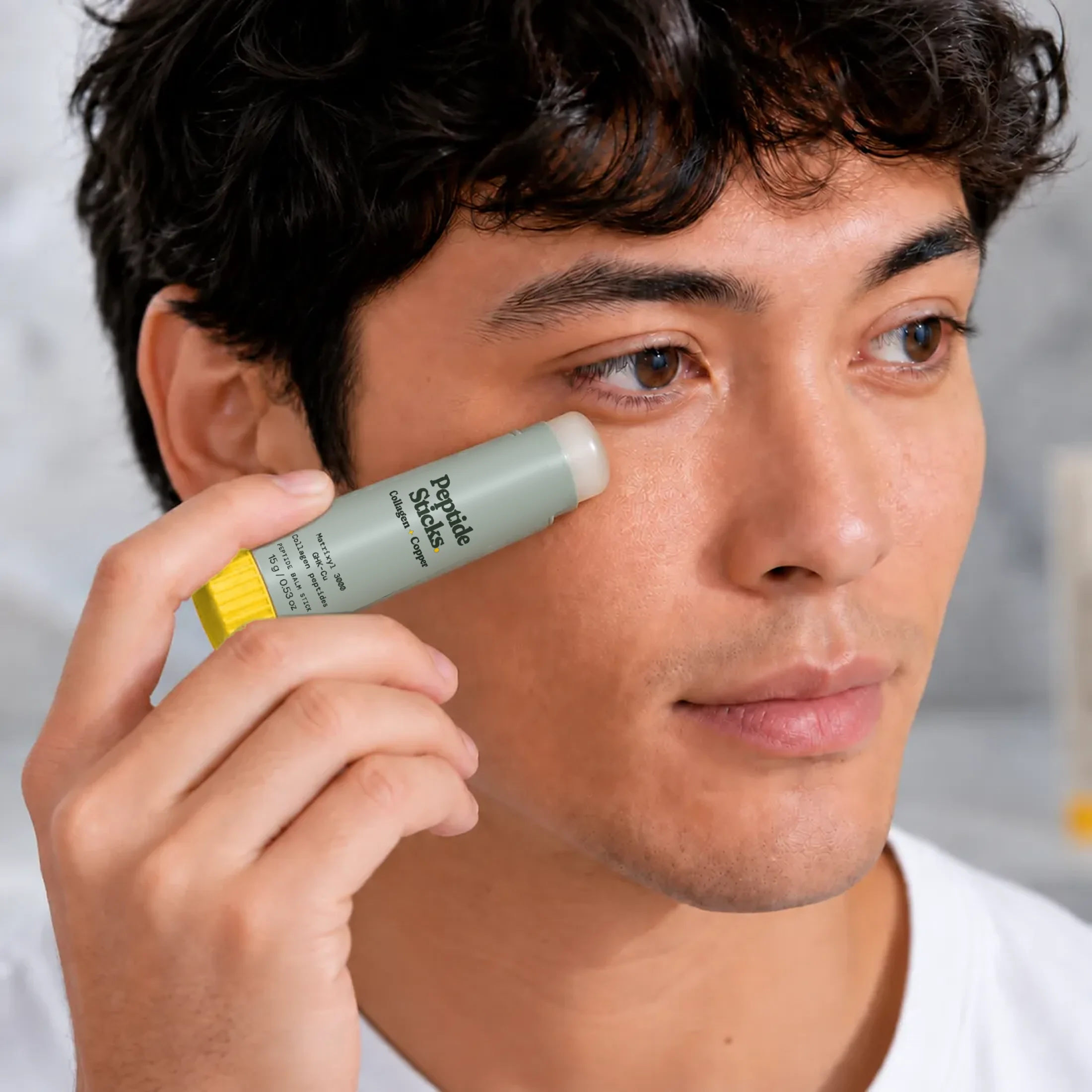
Peptides win. The under-eye area is thin, expressive, and easy to irritate. Retinol near the eyes can help some people with crepiness over time, but it is also one of the fastest ways to create dryness if you overdo it.
For puffiness, especially morning fluid puffiness, a targeted peptide like Acetyl Tetrapeptide-5 with caffeine is the cleaner play. It is more specific and more comfortable for daily use.
For long-term age support
Use both if your skin allows it. The most sensible long-term routine is not a single miracle active. It is SPF every morning, a retinoid at night if tolerated, peptides for targeted support, and enough barrier care to keep the whole thing sustainable.
Retinol can do the heavy lifting for texture and photoaging. Peptides can fill in the jobs retinol does not do as cleanly: calm, tone, puffiness, and barrier support.
The fast decision guide
Choose retinol first if your main goals are texture, fine lines, clogged pores, or long-term photoaging support and your skin is fairly resilient.
Choose peptides first if your skin is sensitive, reactive, dry, barrier-compromised, pregnant or nursing and avoiding retinoids, or if your goals are brightening, calming, depuffing, and targeted support.
Use both if you want the retinoid evidence base without giving up comfort and targeted daytime support.
Can you use peptides and retinol together?
Yes. Peptides and retinol are not enemies. The easiest split is peptides in the morning and retinol at night. That gives each active its own lane and keeps the routine simple.
You can also use peptides on retinol off-nights. This is especially helpful during the first month, when your skin is adapting. Instead of doing retinol, acid, retinol, acid until your barrier taps out, use recovery nights with calming, copper, or barrier-supporting peptides.
The one caveat: be thoughtful around strong acids and strong vitamin C. Very low-pH formulas can make routines more irritating and are not the ideal pairing for copper peptides.
How to run both without irritation
- AM: Cleanse or rinse, use the skincare stick that matches your daytime goal, moisturize if needed, then apply SPF 30+.
- PM retinol night: Cleanse, let skin dry fully, apply a pea-sized amount of retinol or retinal, then moisturize. If you are sensitive, moisturize before and after.
- PM recovery night: Skip retinol. Use Collagen + Copper, or a simple moisturizer-focused routine.
- Ramp slowly: Start retinol two nights a week. Move to every other night only when your skin is calm, not just because the calendar says it is time.
- Do not stack intensity: Avoid retinol plus strong acids plus a scrub plus a new vitamin C in the same 24 hours. The skin does not award points for ambition.
What if you can only use one?
Yes, and either choice can be right.
- Just retinol is a strong choice if your skin tolerates it and your main goals are fine lines, texture, congestion, and long-term photoaging support. Keep the rest of the routine boring: gentle cleanser, moisturizer, SPF.
- Just peptides is a strong choice if retinol makes your skin reactive, if you are avoiding retinoids, or if your goals are more specific than "texture": redness, uneven tone, under-eye puffiness, or barrier support.
- Neither for a while is also valid if your barrier is irritated. Sometimes the best active is a month of moisturizer and sunscreen.
The mistakes that cause irritation
Most retinol irritation is not because retinol is "bad." It is because the routine around it is too much.
- Starting nightly. Your skin does not need a dramatic entrance. Two nights a week is enough at first.
- Applying to damp skin. Damp skin can increase penetration and sting. Let skin dry before retinol.
- Using too much. A pea-sized amount for the face is not a metaphor. More product does not mean faster results.
- Combining with exfoliation too early. Acids and retinol can coexist, but not while your skin is still learning retinol.
- Ignoring barrier signs. Burning, tightness, shiny skin, and sudden product stinging mean stop and recover.
Where peptides can make retinol easier
Peptides are useful because they let you keep a routine going without making every night a high-intensity night. A calming peptide can help on recovery nights, a brightening peptide can handle morning tone work, and a depuffing peptide can treat the under-eye area without dragging retinol too close to a delicate zone.
If you only remember one thing
Retinol is the stronger texture active. Peptides are the more flexible targeted support system. The best routine uses strength where it helps and gentleness where irritation would get in the way.
Where Peptide Sticks fits
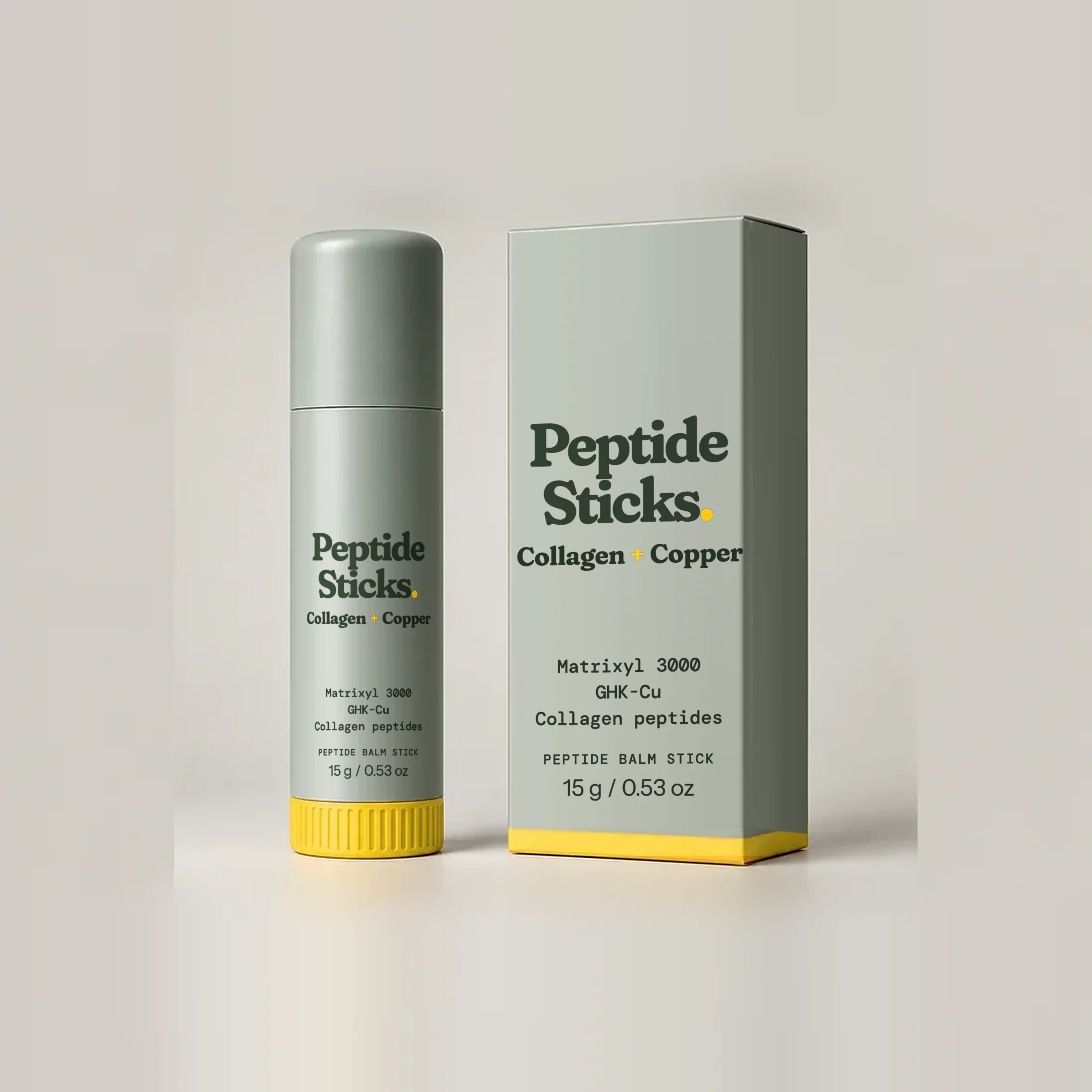
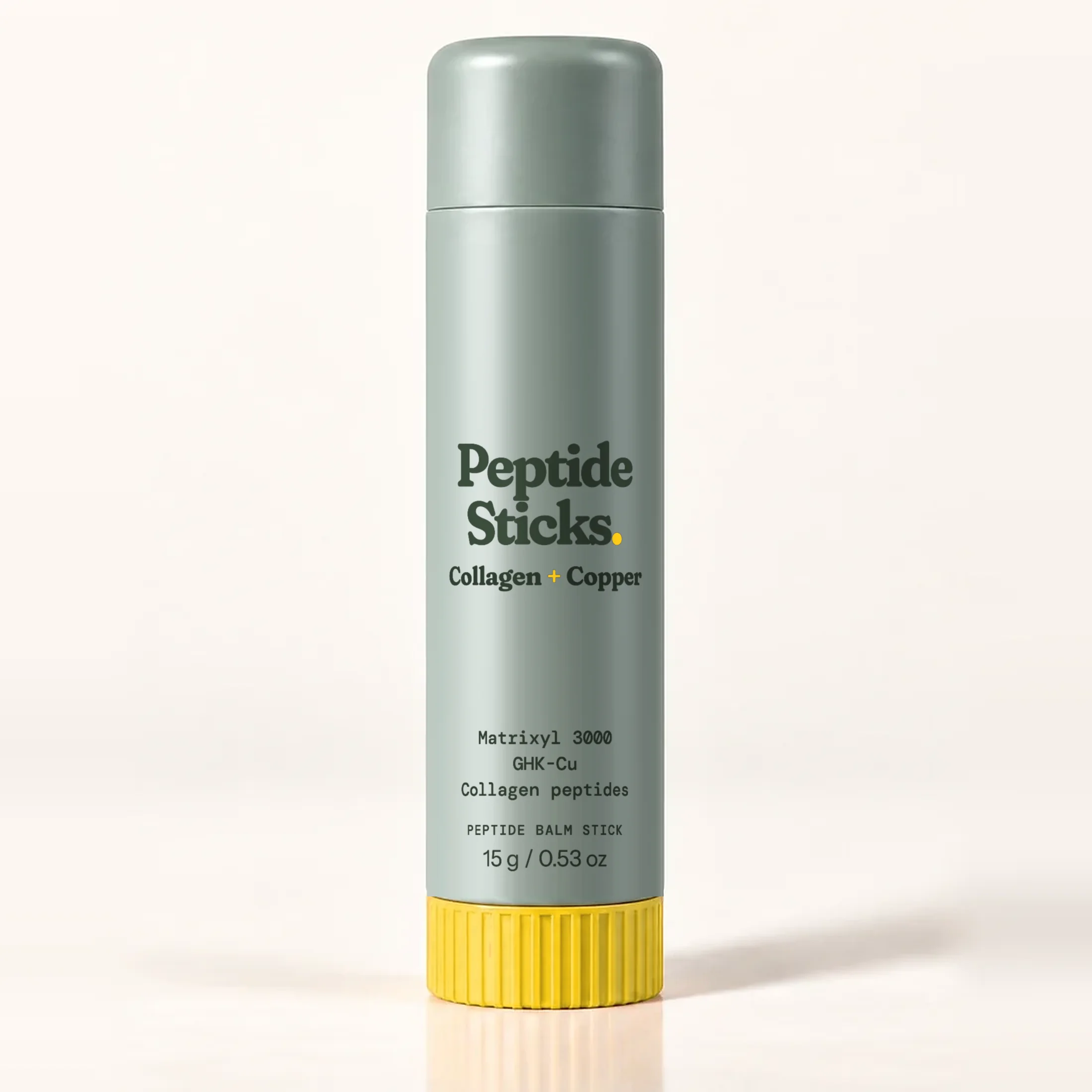
Our first stick, Collagen + Copper, is peptide-led: Matrixyl 3000, collagen peptides, and GHK-Cu for the look of firmer, denser, more cushioned skin. It contains no retinoid, so it sits comfortably alongside the one you already use.
The most useful version for many people is simple: the Collagen + Copper Stick in the morning or on recovery nights, your retinoid at night if you tolerate it, SPF every day.