What people mean by “Ozempic face”
“Ozempic face” is not a medical diagnosis. It is a nickname, popularized in 2023, for changes some people notice in the mirror after losing a lot of weight on a GLP-1 medicine: hollower cheeks and temples, deeper smile lines, a softer jawline, and looser skin along the neck.
The name is borrowed from one brand, but the same change can follow any fast weight loss, whether it comes from semaglutide, tirzepatide, surgery or a strict diet. That is why many dermatologists prefer to talk about facial changes after rapid weight loss rather than about any one drug.
Why it happens
Your face holds small pads of fat that give it fullness, especially in the cheeks and temples. When you lose weight, the face loses fat too. When that happens quickly, the skin over it has less time to adjust, so it can look looser or more lined than before.
Three things make the change more visible:
- Speed. Losing a lot of weight over a few months gives skin less time to adapt than a slower loss.
- Age. Skin makes less collagen and elastin over time, so it springs back less readily.
- Sun history. Years of UV exposure break down the proteins that keep skin firm.
None of this means the medicine is damaging your skin. It means your face is changing shape, and your skin is catching up.
Volume and skin are two separate things
Volume is the fullness under your skin. Only in-office treatments change it.
Skin quality is the firmness, texture and comfort of the skin on top. That is where a daily routine helps.
What skincare can realistically do
Be wary of any product that promises to “fix” this. No cream, serum or stick can replace fat. What a good routine can do is help the skin itself look its best while your body changes: firmer-looking, smoother, more even and better hydrated. For many people, that difference is the one they notice day to day.
A simple routine for a changing face
Keep it short enough to repeat every day. Consistency matters more than the number of products.
- Morning: sunscreen. SPF 30 or higher on the face and neck, every day. Sun exposure is the biggest controllable cause of visible skin aging, and it is the step most often skipped.
- Night: a targeted step. A peptide product or a retinoid on the areas you notice most. Peptides are gentle and suit most skin. Retinoids do more for texture but can irritate, so start slowly. Many people use both on alternate nights. Our guide to peptides vs. retinol compares them.
- Morning and night: a moisturizer. Hydrated skin looks smoother and more cushioned, and a moisturizer helps a retinoid feel comfortable.
Which peptides to look for
“Peptide” on a label tells you little. The named ingredient matters. These three are well studied for the look of firmer, smoother skin:
- Matrixyl 3000 (Palmitoyl Tripeptide-1 and Palmitoyl Tetrapeptide-7). Its supplier’s published trials report a visible reduction in wrinkle depth after 8 to 12 weeks. Those trials tested the ingredient, not any finished product.
- GHK-Cu, a copper peptide. In a 12-week placebo-controlled study of 41 women, a GHK-Cu cream reduced the look of lines and wrinkles more than placebo (summarized in Pickart et al., 2015).
- Collagen peptides, used for a softer, conditioned, more cushioned feel at the surface.
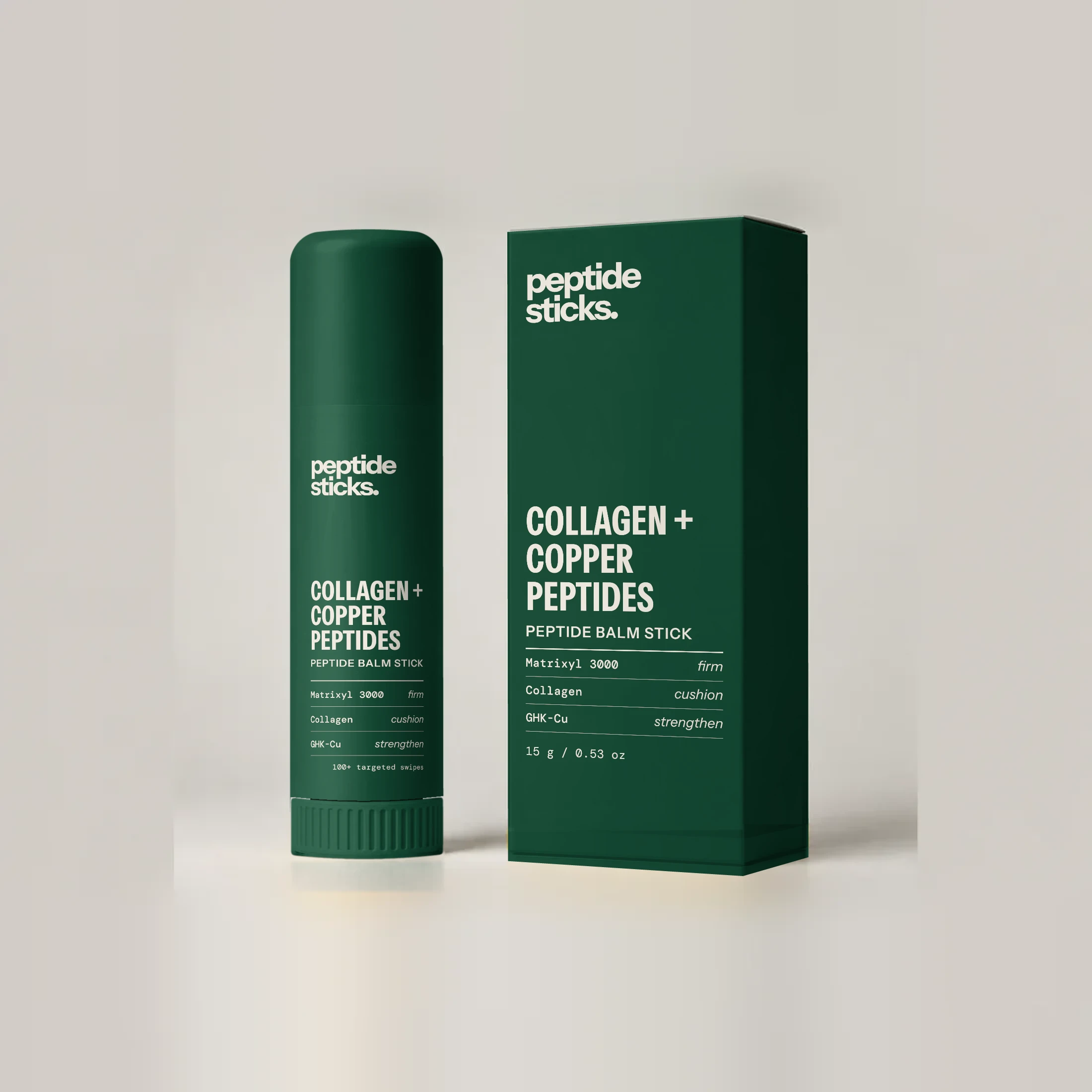
Our Collagen + Copper Stick is being developed with all three. You can read more about each in the peptides.
Where to apply it
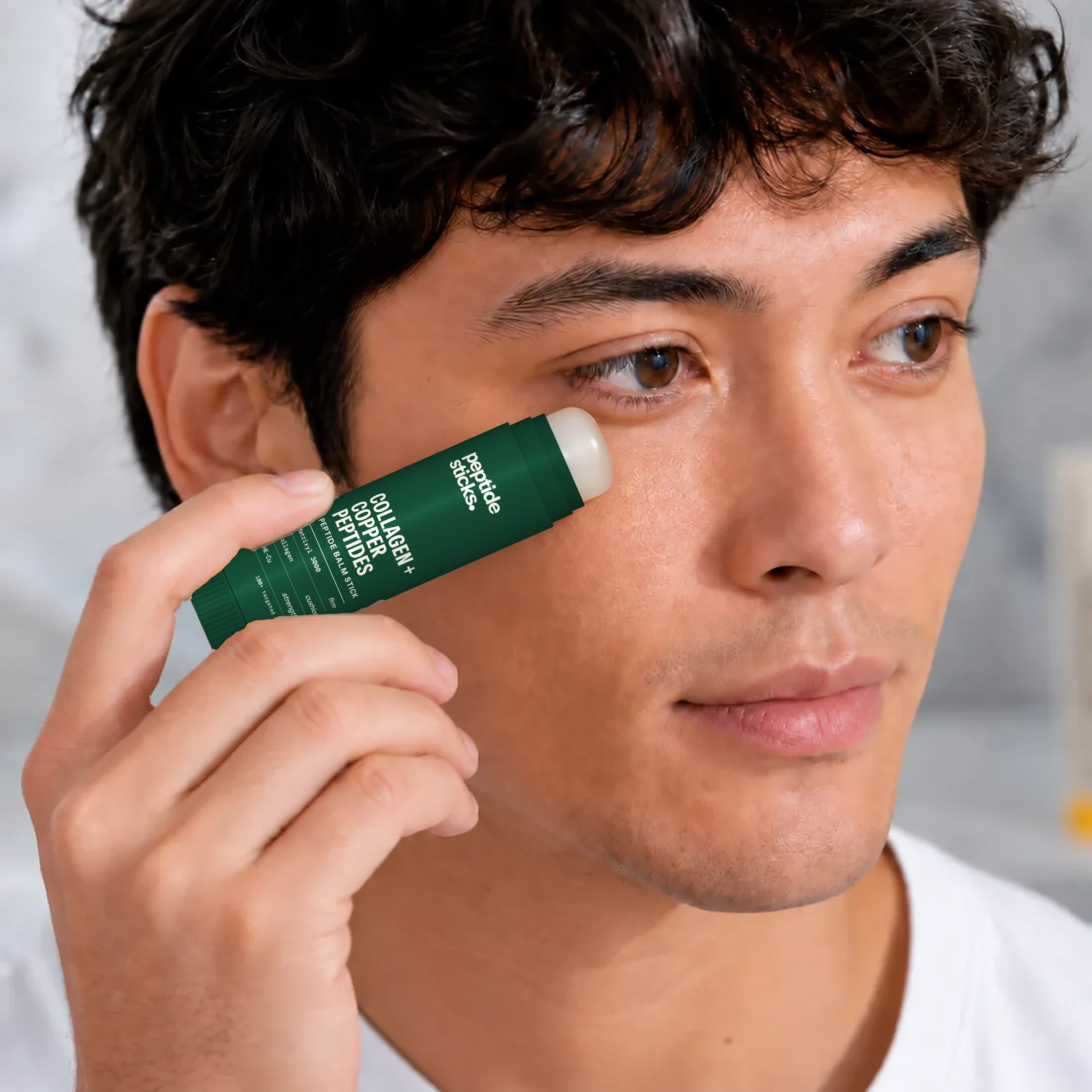
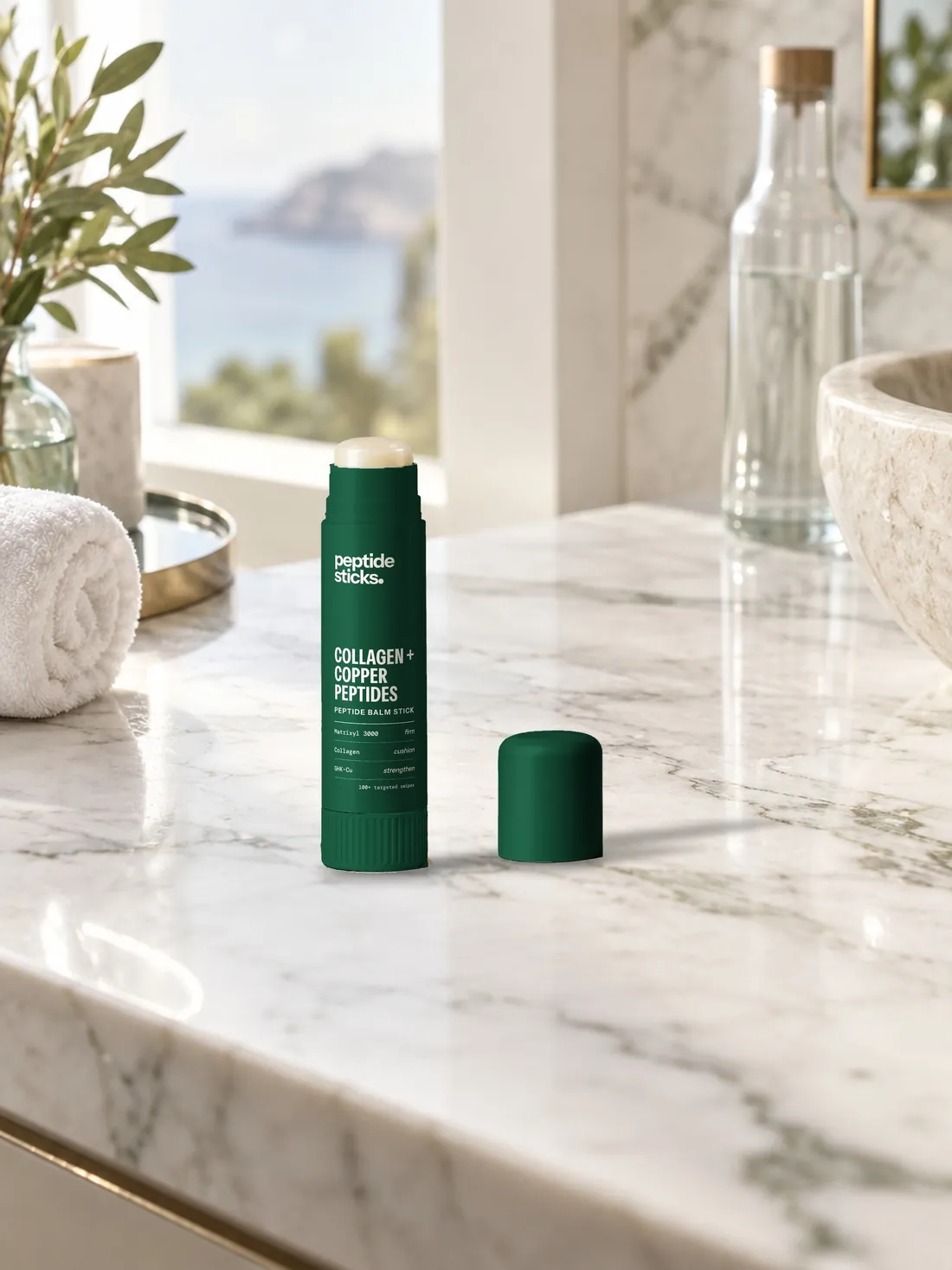
The changes after weight loss tend to show in the same places, so that is where a targeted product earns its keep: the cheeks, the lines from nose to mouth, along the jawline, and the front and sides of the neck. Apply with light upward strokes and never tug the skin. A twist-up stick makes this easy because you place the product exactly where you want it, with nothing on your fingers.
When to see a dermatologist
If the loss of fullness bothers you, a board-certified dermatologist can talk you through in-office options, such as fillers, collagen-stimulating injectables, or energy-based treatments for loose skin. These are medical decisions with real costs and risks, and they are outside what any skincare brand should advise on.
It is also worth raising your skin with the clinician who prescribes your medicine. They can talk with you about the pace of your weight loss and about nutrition, including protein, which matter for how your whole body adjusts.
A note on the word “peptide”
Semaglutide and tirzepatide are peptide medicines, which is why the word “peptide” is everywhere right now. Skincare peptides are a completely different category: cosmetic ingredients applied to the surface of skin, not medicines. A skincare stick has no effect on your weight, appetite or blood sugar. If that difference is new to you, start with topical vs. injectable peptides.
The bottom line
Fast weight loss can change the shape of your face, and no product can undo that on its own. What you can control is the skin on top: protect it every morning, give it a targeted step at night, and keep it hydrated. Give any new step 8 to 12 weeks, take a photo on day one, and see a dermatologist for anything to do with volume.