Why this needs its own answer
Searches for the word "peptide" have climbed sharply over the past year, and most of that surge has nothing to do with skincare. It is being driven by interest in injectable research compounds like BPC-157 and retatrutide, discussed in weight-loss and recovery communities. If you clicked into this expecting to learn about peptide serums and stumbled onto dosing forums instead, or the reverse, you are not imagining the confusion. The word is doing a lot of unrelated work right now.
We think the honest move is to name that confusion directly rather than pretend the word "peptide" means one clean thing.
Three different worlds, one shared word
Almost everything called a "peptide" falls into one of three very different categories.
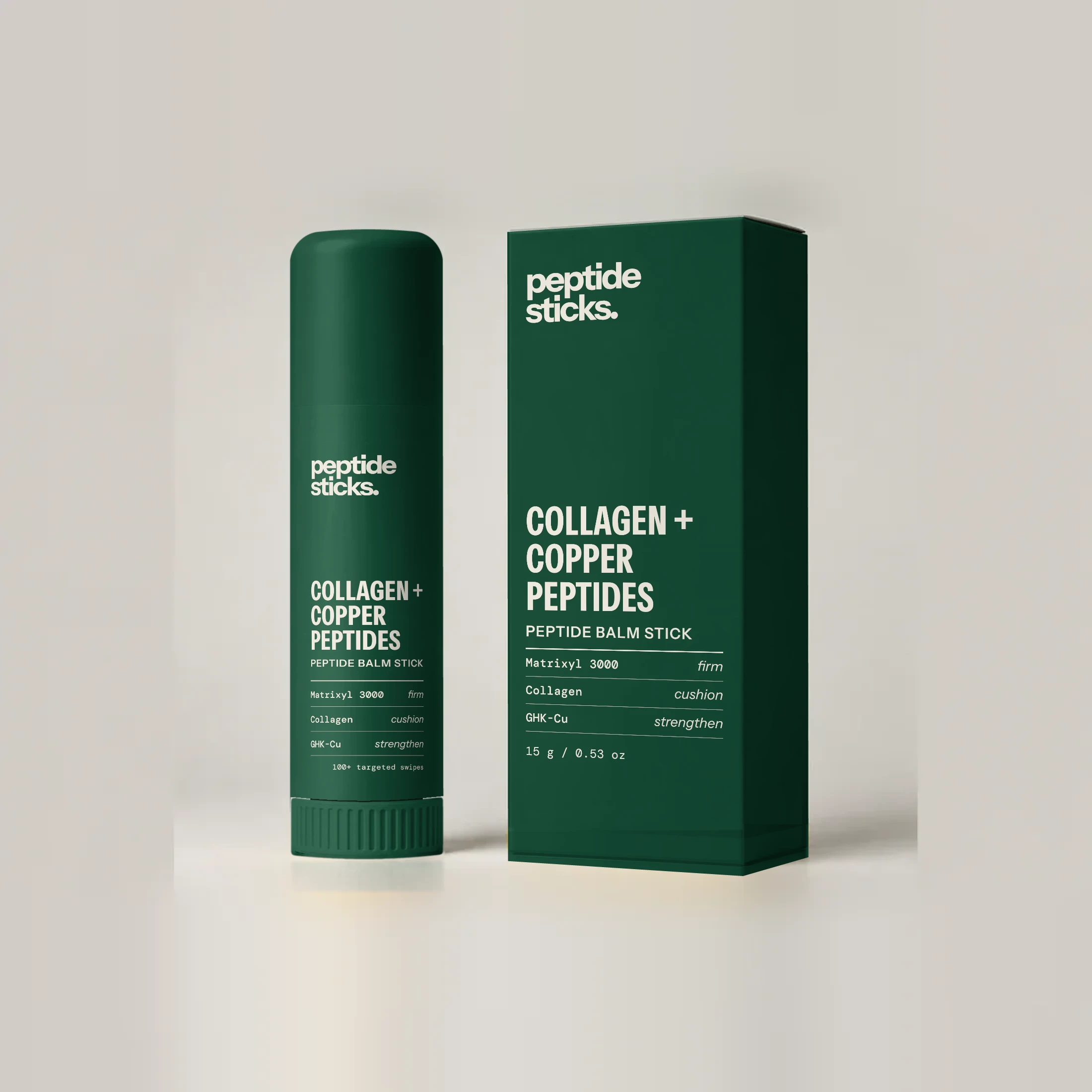
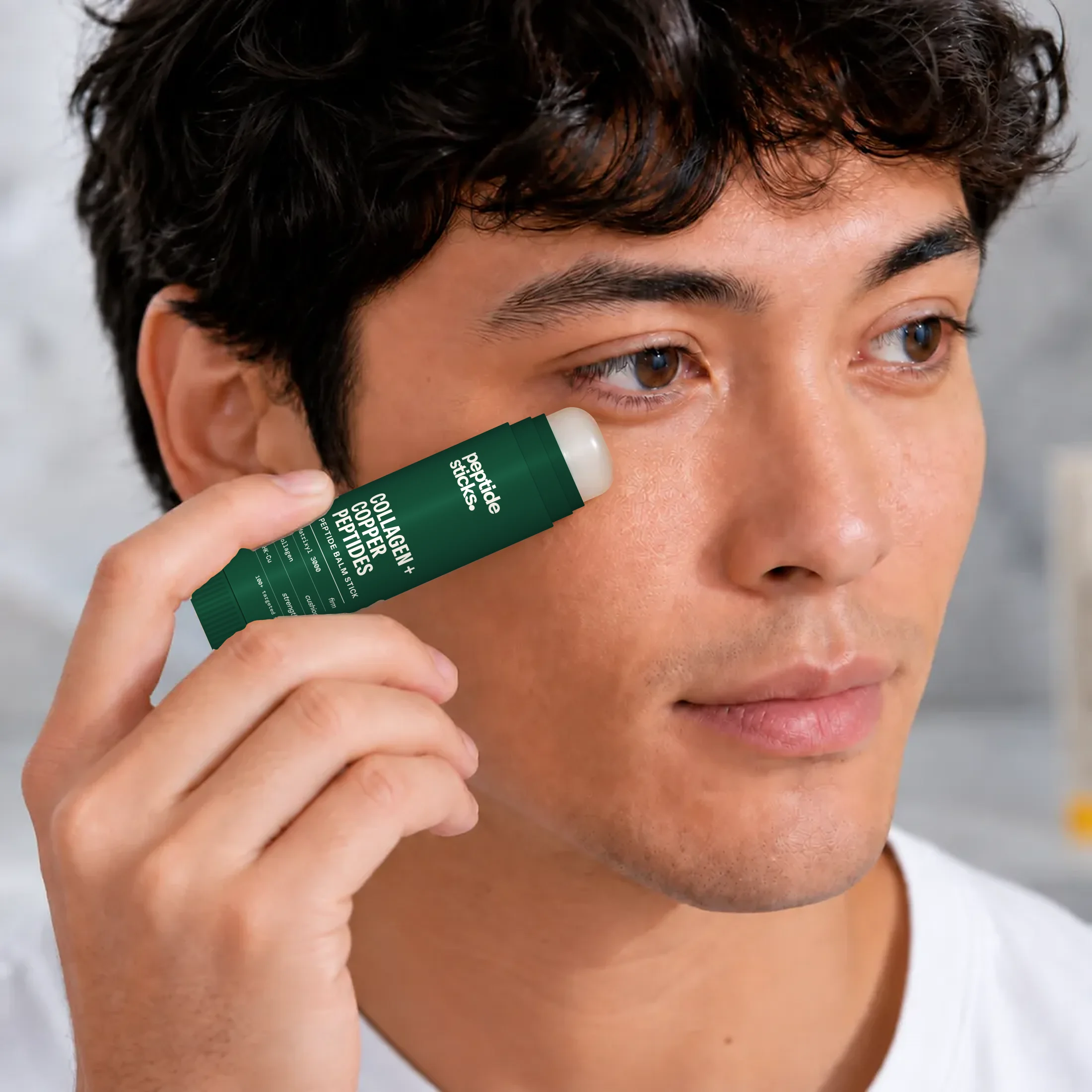
- Topical peptides are applied to the skin in a serum, cream, or stick. They act locally, at the surface and upper layers, and are regulated in the US as cosmetic ingredients. This is what Peptide Sticks makes.
- Oral collagen peptides are swallowed, usually as a powder or a chew. They are broken down in digestion and used wherever the body decides, not sent to a specific spot on your face. We cover this comparison in more depth in do peptides actually work.
- Injectable and research peptides, including BPC-157 and retatrutide, are administered systemically, usually by injection, and are studied for effects on the whole body such as tissue repair, appetite, or metabolism. This is the category driving most of the current search interest in the word "peptide."
The one-line difference
Topical peptides are a surface-level cosmetic ingredient, placed exactly where you want a visible effect.
Injectable and research peptides are systemic compounds, studied medically, with a completely different risk profile, approval status, and purpose.
What BPC-157 and retatrutide actually are
We will not go deep here, because it is genuinely not our category and we do not want to play doctor. In plain terms:
BPC-157 is a peptide originally derived from a protein fragment found in gastric juice, studied in early and mostly animal research for gut lining and tissue repair. It is not an FDA-approved drug, is not legal to sell as a dietary supplement in the US, and anything sold as BPC-157 online is typically labeled "not for human consumption." We do not make, sell, or endorse it.
Retatrutide is an investigational injectable medication, a triple receptor agonist in the same broad family as GLP-1 drugs, being studied in clinical trials for weight loss. As of this writing it is not yet FDA-approved and is only available through clinical trials or, in some cases, unregulated gray-market sources that carry real risk. It has nothing to do with skincare.
Tirzepatide and semaglutide are the two you are most likely to have heard of, because they are the approved prescription medications behind the weight loss drugs people discuss constantly. They are peptide-based, which is exactly why the word peptide now appears in conversations that have nothing to do with your face. They are prescribed and supervised by clinicians. A stick you swipe along your jawline has no relationship to them beyond sharing a chemistry term.
If you are curious about any of these, that is a conversation for a doctor, not a skincare brand. We are only naming them here so the difference from topical peptide skincare is unmistakable.
Peptides for weight loss and muscle growth are not skincare
Two of the fastest-growing things people now search alongside the word peptide are weight loss and muscle growth. It is worth being blunt about this, because the shared vocabulary is doing real damage to people's expectations.
Peptides for weight loss means prescription or investigational injectable medication, taken under medical supervision, acting on appetite and metabolism throughout the whole body. Peptides for muscle growth usually refers to growth hormone secretagogues and similar compounds, most of which are sold as research chemicals, are not approved for human use, and are banned in tested sport.
Peptides for skin means a cosmetic ingredient applied to the surface of your face to influence how it looks. It does not enter your bloodstream in any meaningful way, it will not affect your weight, and it will not build muscle. No topical peptide can do any of those things, and any product implying otherwise is one to walk away from.
The shared word is an accident of chemistry, not a shared mechanism. A peptide is simply a short chain of amino acids, a category about as broad and about as informative as the word liquid.
Are peptides safe, and what about side effects?
This question needs splitting the same way, because the honest answer is completely different for each group.
Topical skincare peptides are among the better-tolerated actives in cosmetics. They are generally regarded as gentle and non-irritating, including on sensitive skin, which is much of their appeal for people who cannot get on with retinoids. The usual caveats still apply: patch test anything new, introduce one product at a time, and bear in mind that irritation from a finished product often traces back to fragrance, essential oils, or a preservative rather than to the peptide. That is a large part of why we leave fragrance and dyes out.
Injectable, research, and prescription peptides are an entirely different risk conversation, involving systemic effects, real contraindications, and, in the case of gray-market vials, no guarantee that the contents match the label. That conversation belongs with a doctor. We make cosmetics, and we are not qualified to have it with you.
What is a peptide bond?
This one is pure chemistry, and it is worth answering plainly since it comes up in search a lot. A peptide bond is the chemical bond that links one amino acid to the next, formed when the acid group of one amino acid reacts with the amine group of another and releases a water molecule. Chain a few amino acids together with peptide bonds and you have a peptide. Chain enough peptides together and you have a protein, like the collagen and elastin already in your skin.
That is the entire technical root of the word "peptide," whether it is describing a skincare ingredient, a swallowed supplement, or an injectable compound. The bond is the same kind of chemistry in every case. What differs completely is the specific molecule, how it is delivered into or onto the body, and what it is actually studied to do. For the fuller, skincare-specific version of this, see what are peptides, a plain-English guide.
Why we only make topical peptides
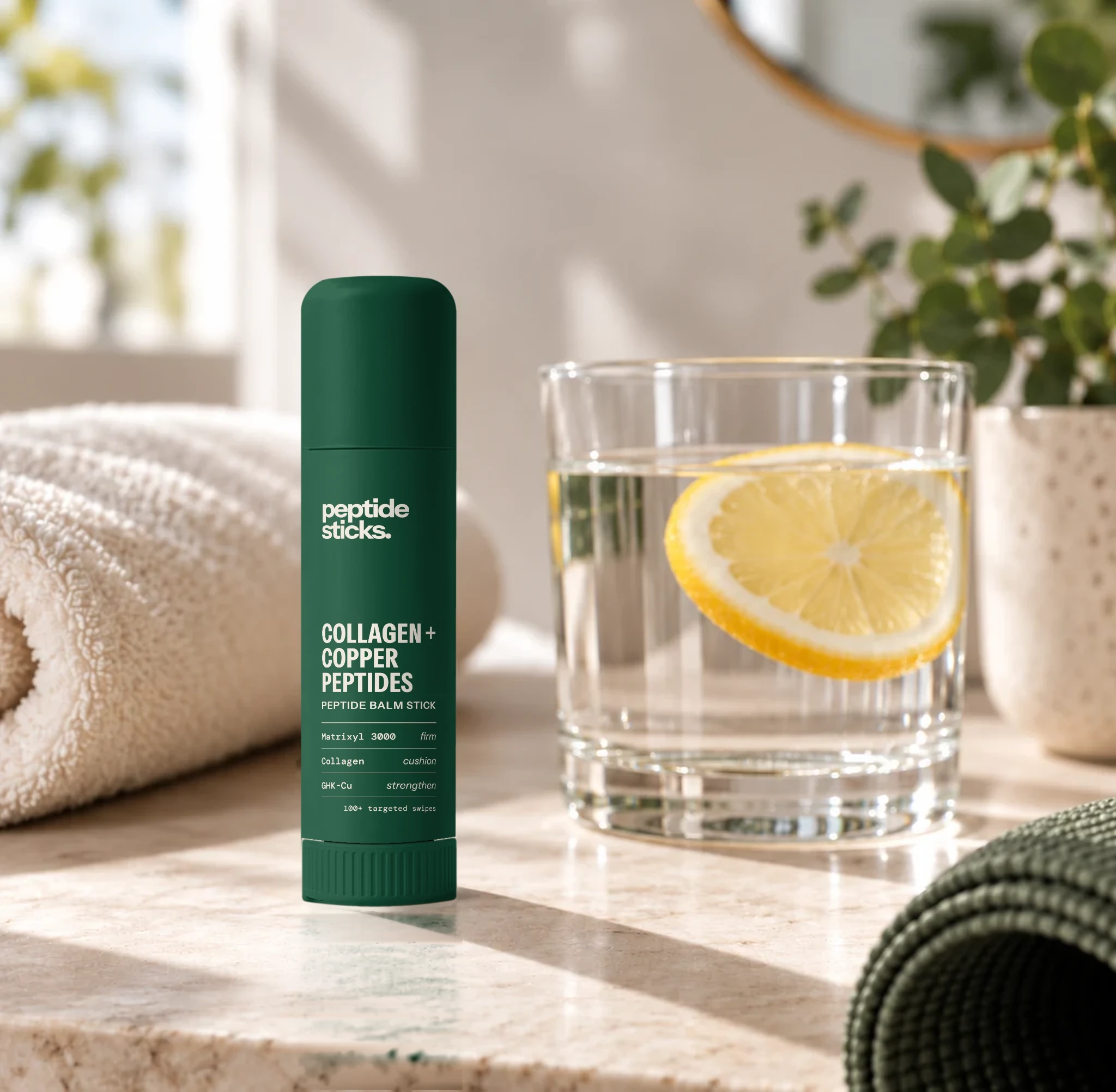
Every peptide in our Collagen + Copper Stick, Matrixyl 3000, collagen peptides, and GHK-Cu, is a cosmetic-grade ingredient studied and used topically, regulated in the US as a cosmetic, and applied to the surface of skin rather than injected or ingested. Nothing we sell enters the bloodstream by design, and none of it carries the sourcing, purity, or dosing risks that come with unregulated injectable compounds.
That is a narrower, more boring lane on purpose. If your goal is the visible look of firmer, smoother skin, a well-studied topical peptide matched to that goal is the right tool, and it is the only category we work in.
If you only remember one thing
"Peptide" tells you about a chemical shape, not a use case, a safety profile, or an approval status. Always ask which peptide, delivered how, studied for what, before treating the word alone as useful information.
The bottom line
Topical peptide skincare and injectable research peptides share a chemistry term and nothing else that matters day to day. One is a cosmetic ingredient you apply to your face for a visible look. The other is a systemic compound with medical stakes that belongs in a conversation with a doctor, not a skincare routine. If you are taking a GLP-1 medicine and wondering what skincare can do for your face, read our guide to skincare during GLP-1 weight loss. If you came here looking for the skincare side of that word, our plain-English guide to peptides and peptide-by-concern matching guide are the right next stops.