Start with the concern, not the ingredient
Most people buy peptides backward. They hear a peptide is good, buy it, and then hope it matches their skin. The better order is to name your main concern first, then choose the peptide built for that job. Below, each section is a concern. Find yours and follow the link to the deeper explainer.
One rule applies to all of them: peptides are gradual support ingredients. Give any pick eight to twelve weeks of consistent use before you judge it, and keep daily sunscreen in the routine no matter which one you choose.
For the look of firmness and fine lines
Best peptide: Matrixyl 3000. This is one of the most studied signal peptides for the appearance of firmer skin and softer fine lines. It nudges skin toward firmer-looking behavior over time rather than forcing a fast change, so it rewards patience and consistency.
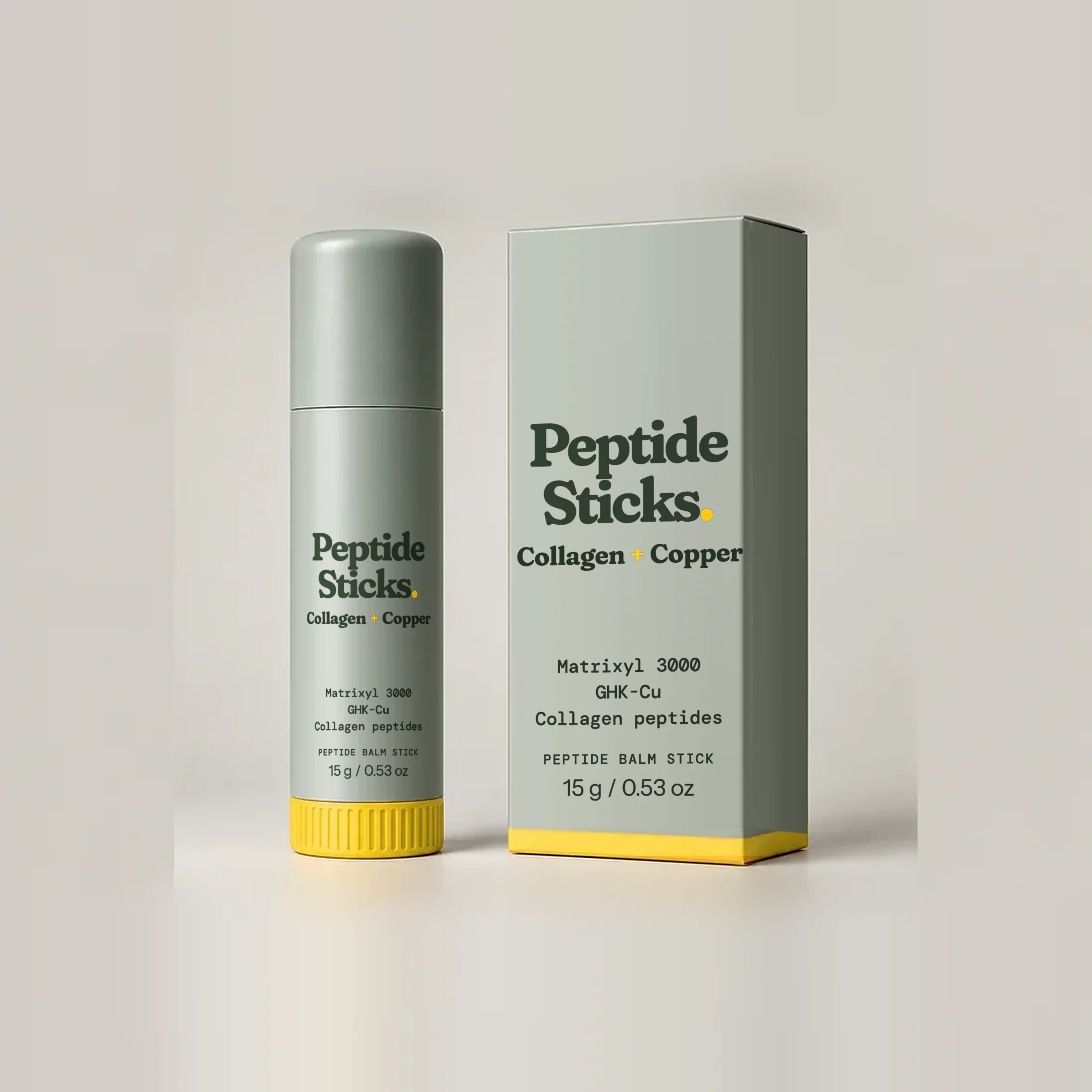
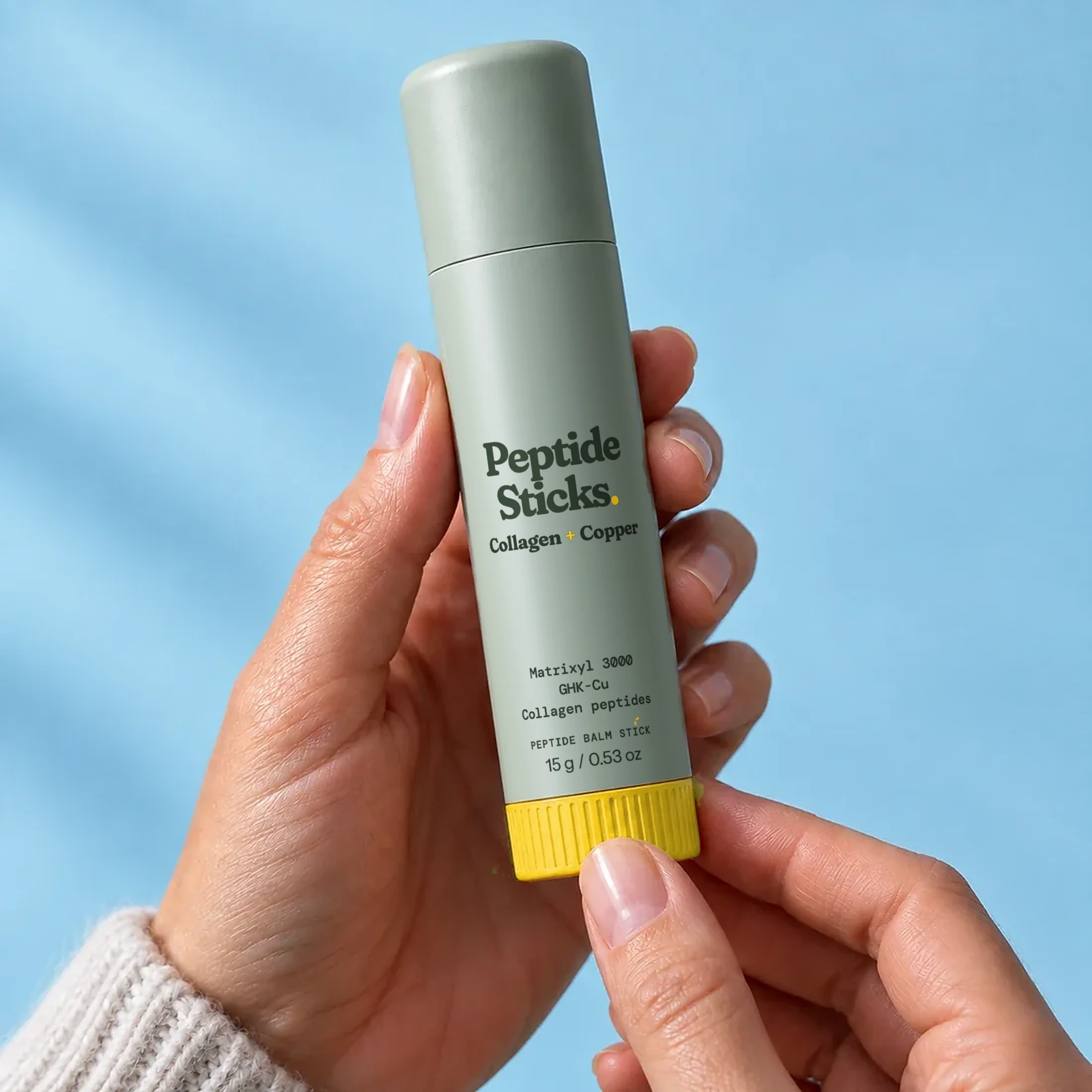
Read the full breakdown on the Matrixyl 3000 page, or see it in the Collagen + Copper Stick.
For uneven tone and dark marks
Best peptide: Oligopeptide-68. If your concern is the look of uneven tone, post-blemish marks, or general dullness, a brightening peptide aimed at the pigment pathway is the cleaner play than a harsh acid. Oligopeptide-68 pairs well with niacinamide for tone support and is gentle enough for daily use.
More on the Oligopeptide-68 page.
For redness and reactive skin
Best peptide: Palmitoyl Tripeptide-8. When skin is flushed, sensitized, or simply tired of strong actives, this is a peptide used for visible calm. It is the opposite of an aggressive ingredient, which is exactly why reactive skin tends to get along with it.
See the Palmitoyl Tripeptide-8 page.
For barrier support and renewal
Best peptide: GHK-Cu, the copper peptide. If your skin feels compromised, rough, or just not resilient, GHK-Cu has a long research history around skin renewal and the look of a reinforced barrier. It is a strong choice for recovery nights and for skin that has been pushed too hard by other actives.
Details on the GHK-Cu copper peptides page, or in the Collagen + Copper Stick.
For under-eye puffiness
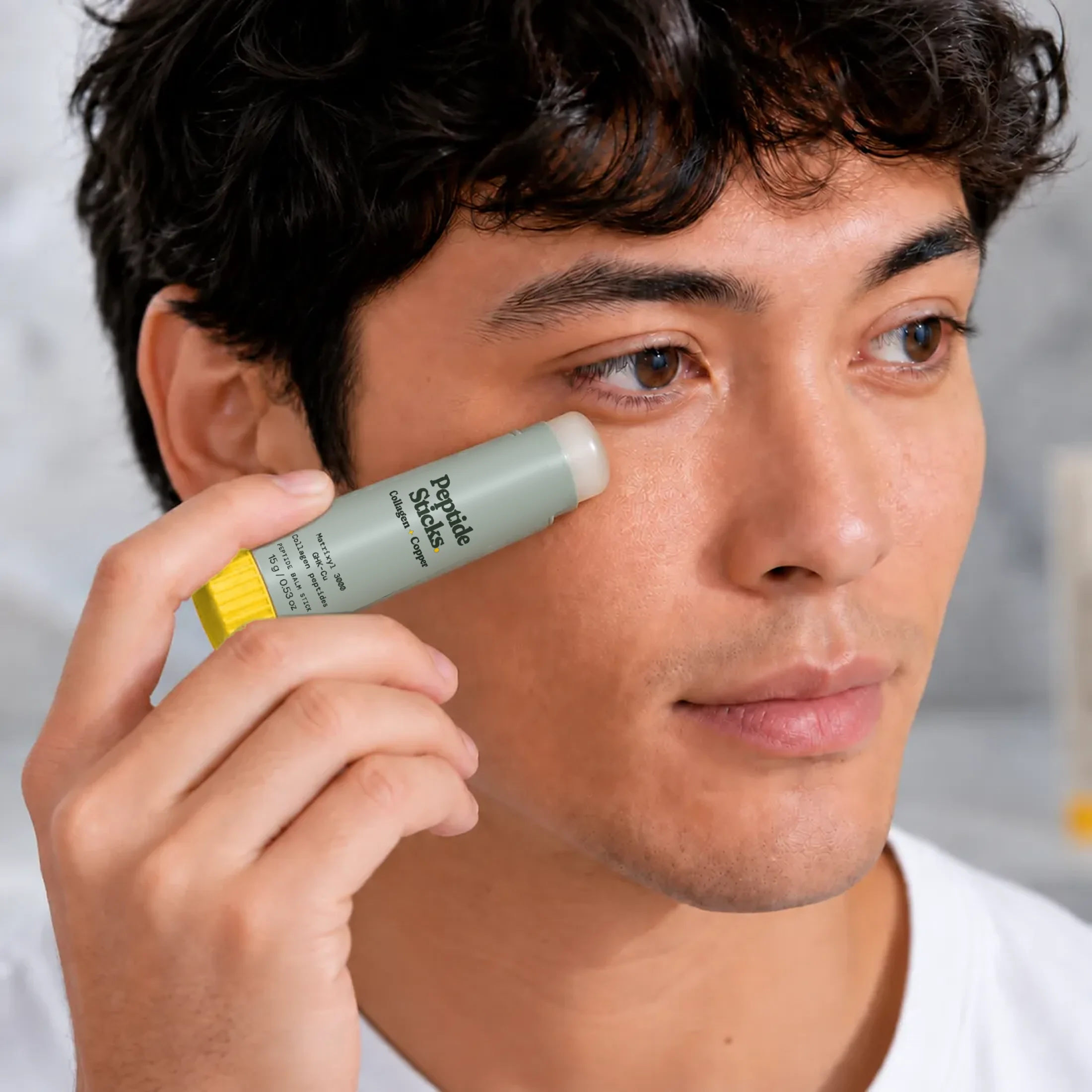
Best peptide: Acetyl Tetrapeptide-5. The under-eye area is thin and easy to irritate, so it deserves a peptide chosen for it rather than a strong active borrowed from elsewhere. Acetyl Tetrapeptide-5 targets the appearance of puffiness, especially the morning fluid kind, and is comfortable for daily use.
See the Acetyl Tetrapeptide-5 page.
For nighttime texture, gently
Best pick: a retinyl-peptide complex. If you want texture support but free retinol is too much for your skin, a gentler retinoid such as encapsulated retinal paired with smoothing peptides is the softer nighttime route to refined-looking texture.
More on the Retinyl-Peptide Complex page. For how retinoids and peptides compare, see peptides vs. retinol.
The quick match
Firmness, fine lines: Matrixyl 3000.
Uneven tone, dark marks: Oligopeptide-68.
Redness, reactive skin: Palmitoyl Tripeptide-8.
Barrier, renewal: GHK-Cu copper peptides.
Under-eye puffiness: Acetyl Tetrapeptide-5.
Gentle nighttime texture: Retinyl-Peptide Complex.
Can you use more than one?
Yes, and most people end up with two or three, because skin rarely has a single concern. Peptides are some of the most layer-friendly actives in skincare, so a typical setup might be a brightening or firming peptide in the morning and a barrier or renewal peptide at night. For the step-by-step version, including where each one goes in an AM and PM routine, read how to layer a targeted skincare stick.