What are collagen peptides, exactly?
Collagen is the most abundant protein in skin, a long, rope-like molecule built from a repeating pattern of three amino acids: glycine, proline and hydroxyproline. Whole collagen is far too large to do much when applied to skin.
Hydrolysis breaks that rope into much shorter pieces. The result, hydrolyzed collagen or collagen peptides, dissolves easily, feels light, and behaves very differently from the intact protein.
How do they work on skin?
Collagen peptides are humectants and film formers. They attract water and help slow its loss from the surface, and as they settle they leave a thin, flexible film that smooths the feel of skin.
That surface role is the honest story. Even hydrolyzed, most collagen fragments are too large to travel into the deeper layers where skin makes its own collagen. Topical collagen conditions skin; it doesn’t rebuild it.
Why pair them with signal peptides?
Because they do different jobs. Matrixyl 3000 and GHK-Cu are small signal peptides studied for the look of firmer, smoother skin over weeks. Collagen peptides take care of how skin feels right now: hydrated, soft and cushioned.
Put together, you get a formula that works on the look of firmness over time and on comfort from the first swipe.
Topical vs. oral collagen
Collagen supplements use the same kind of ingredient, but they are swallowed and digested, and their research is a separate field. Nothing on this page is about supplements. Applied to skin, collagen peptides are a conditioning ingredient, judged by feel and hydration.
How to use collagen peptides
Collagen peptides are among the easiest ingredients to live with. They suit morning or night, layer under moisturizer, sunscreen or makeup, and sit comfortably alongside retinol, vitamin C, niacinamide and other peptides.
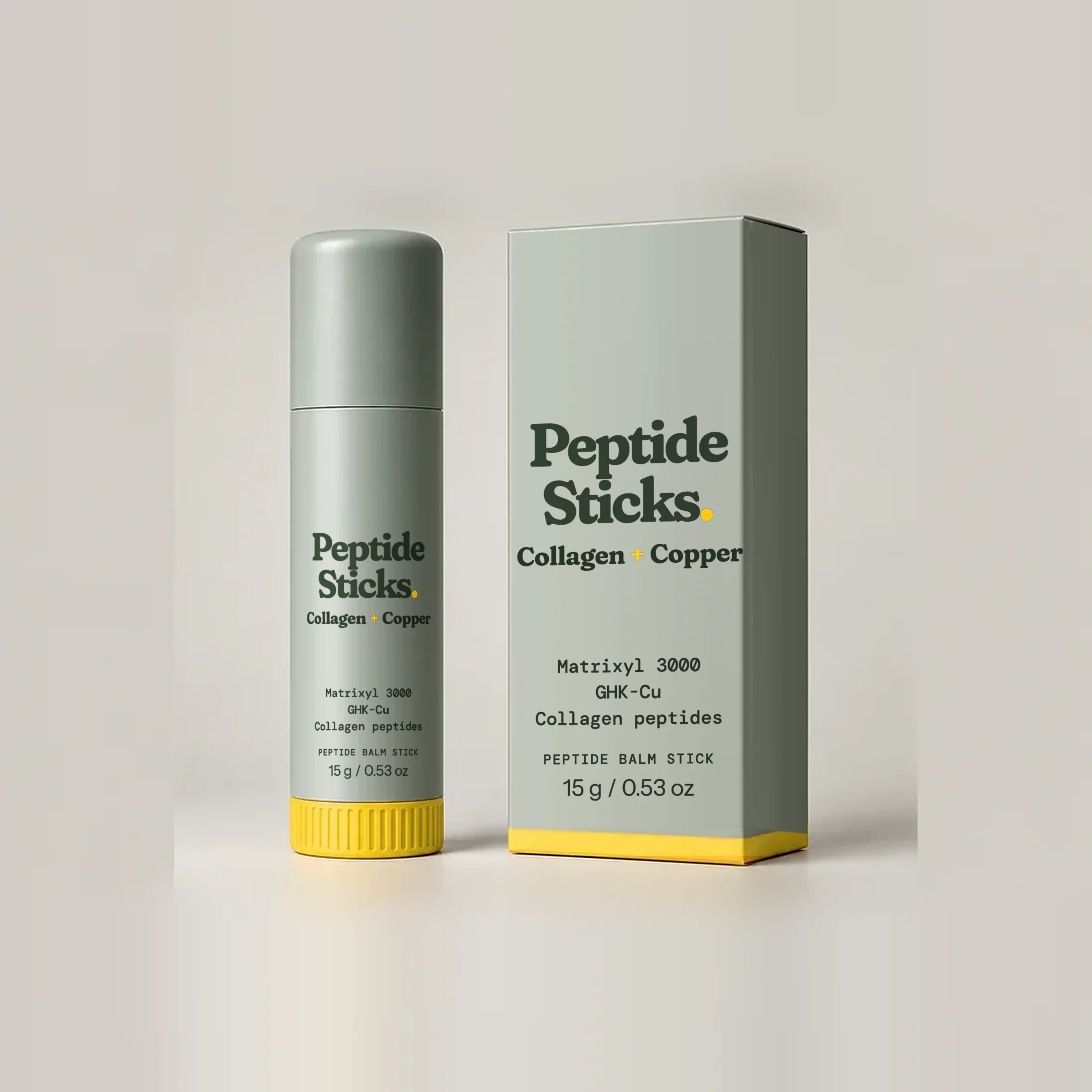
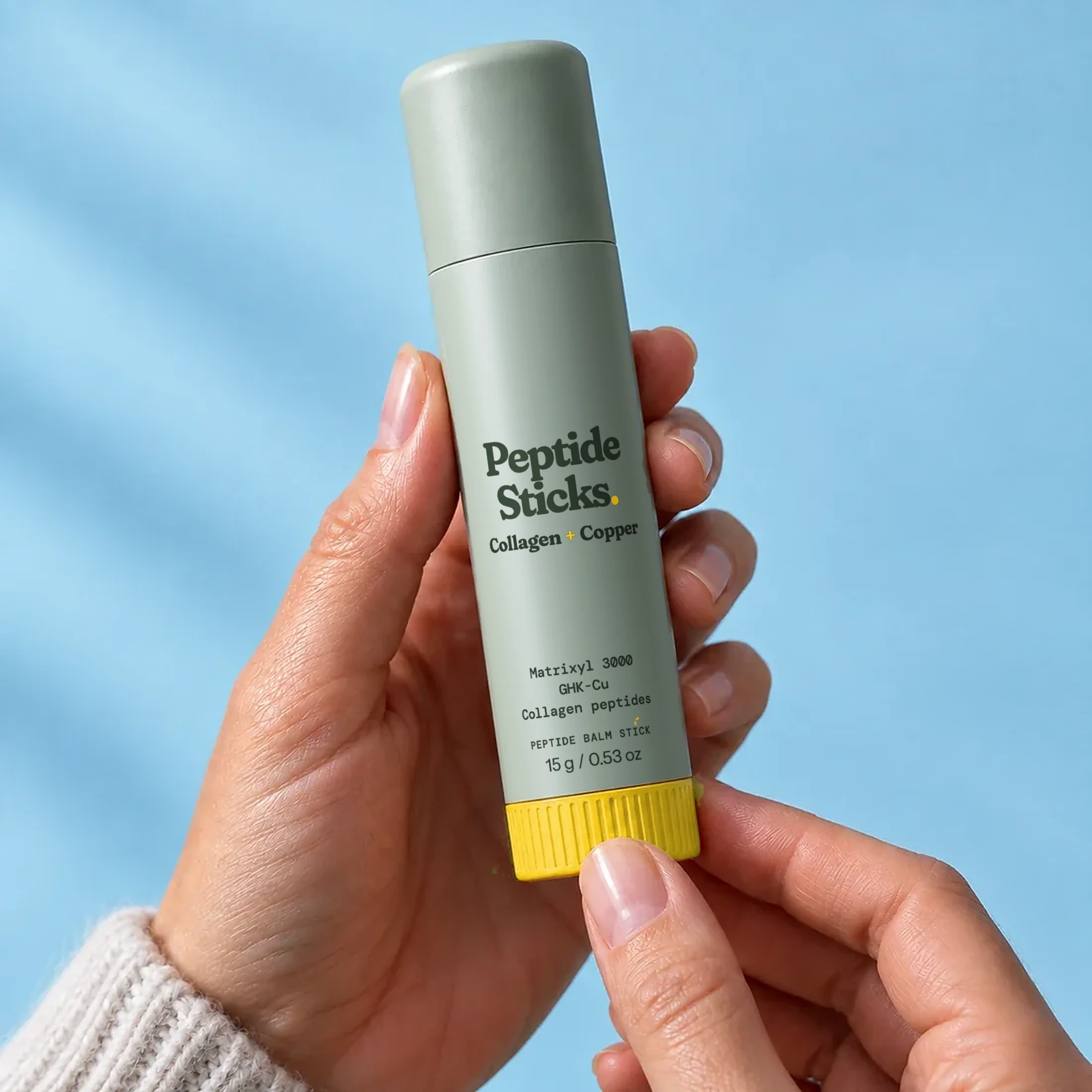
In a stick like the Collagen + Copper stick, the water free base carries them straight to the places that feel tight or dry, like smile lines, the jaw and the neck.