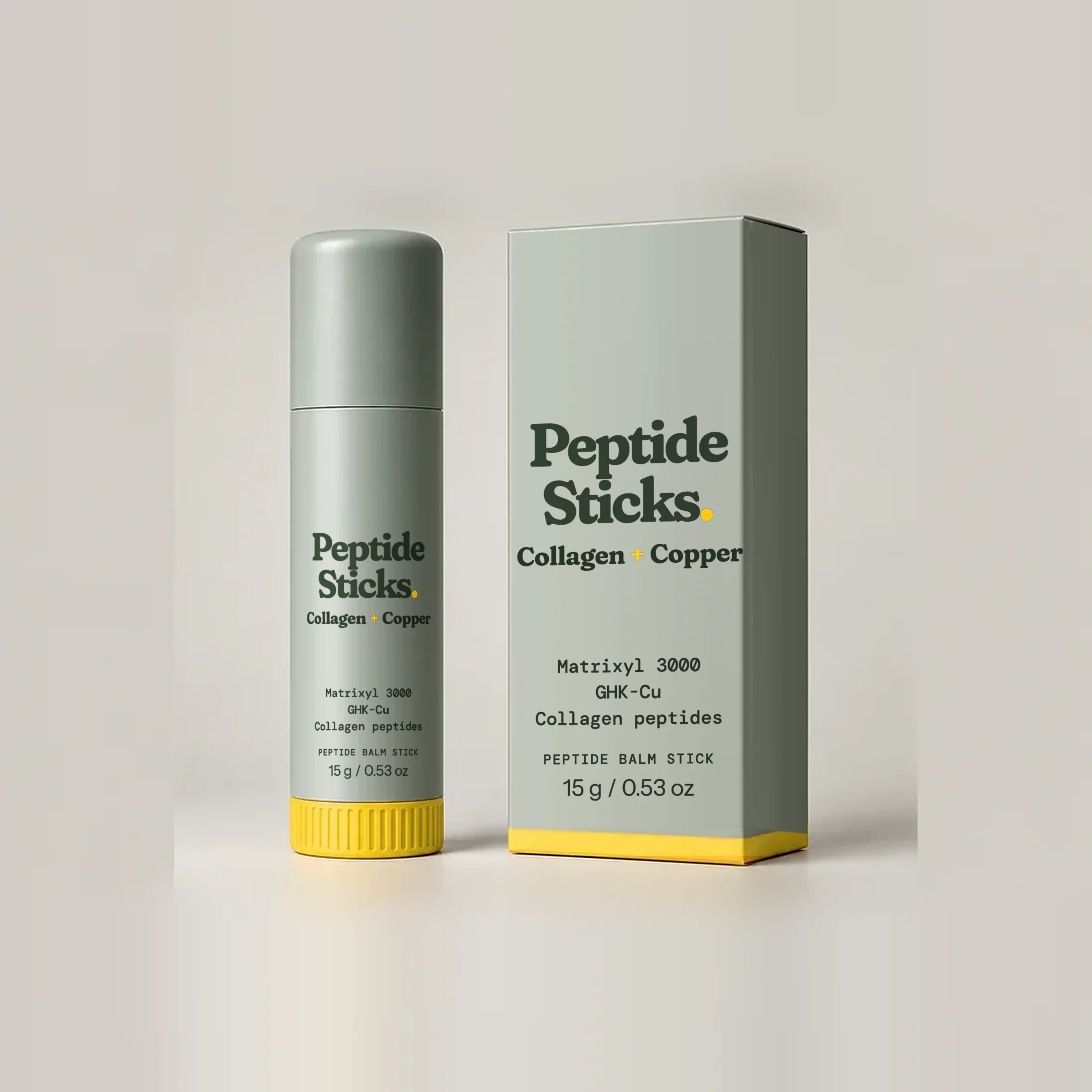
The short answer
A balm stick leaves a cushion. A serum stick disappears. That is the whole difference in how they behave on skin, and everything else follows from it.
What the difference is not: a measure of how well the product works. A balm stick with an unnamed "peptide complex" is a weaker product than a light serum stick with Matrixyl 3000 high in the list. Format is texture. The ingredient list is performance.
Side by side
Balm stick. Richer finish, slightly occlusive, sits on skin, seals moisture, best as a last step. Strong on the neck, chest, dry patches, and winter skin.
Serum stick. Lighter finish, settles quickly, layers cleanly under moisturizer, sunscreen, and makeup. Strong on the face, in the morning, and for anyone who wears foundation.
Both. Water free, twist-up, precisely placed, and only as good as the named peptide inside.
Why the names are so blurry
There is no regulatory definition of either term. A brand decides what to call its stick, and the decision is usually about positioning rather than chemistry. A rich stick called a serum stick sells to people who want treatment. A treatment stick called a balm sells to people who want comfort. That is why you will find products marketed as balm sticks that feel lighter than other brands' serum sticks.
Because of that, a lot of well-made products settle on the compound name: a balm serum stick. It is not a hedge, it is an accurate description of a water free stick that carries serum-level actives with a balm's glide.
How to choose, in four questions
- Are you layering anything on top? Foundation, sunscreen, or a heavier moisturizer all argue for a serum stick. Nothing on top means a balm stick is fine.
- Is your skin dry or oily? Dry, tight, or flaky skin benefits from the occlusive finish of a balm. Oily or congestion prone skin usually prefers the lighter option, though the base matters more than the category name.
- Where are you using it? Neck, chest, hands, and elbows take a balm happily. The center of the face in summer generally does not.
- What is the named peptide? This is the question that actually decides whether the product works. Everything above decides whether you enjoy using it.
Can you use both?
Yes, and it is a reasonable routine if you have a genuinely dry area. Apply the lighter serum stick first, press it in, wait about a minute, then use a balm stick only where you need the cushion: the neck, the corners of the mouth, a patch that keeps flaking. Light to rich is the general rule for layering, and going too fast between layers is the usual cause of pilling, not the products themselves.
For the full order of operations, including where retinoids and acids fit, see how to layer a targeted skincare stick.
The thing both formats get judged on unfairly
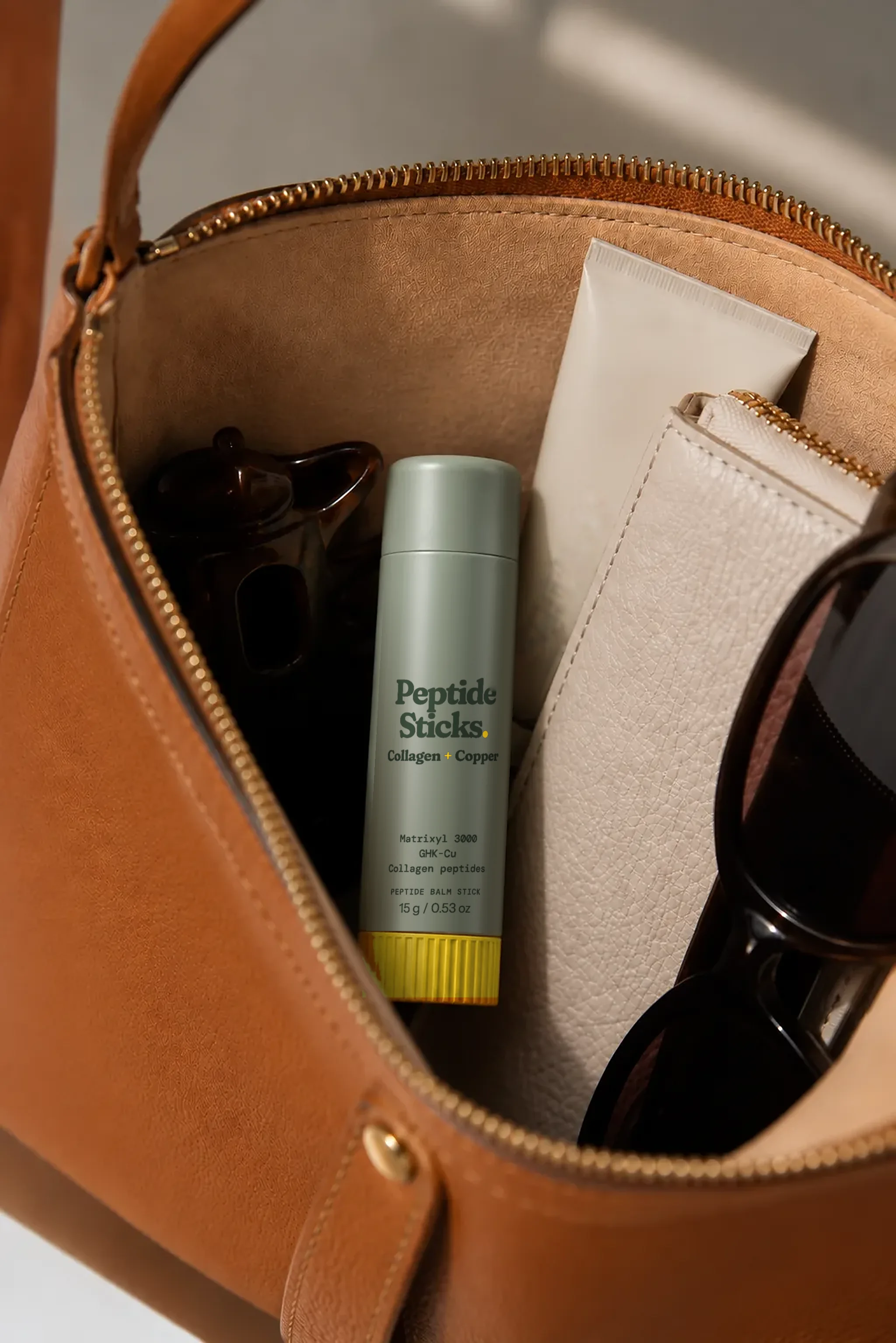
Melting. Whichever name is on the tube, a stick that goes soft in a bag has a base problem. Most sticks are held together by butters and waxes with a low melt point, which is comfortable and cheap and fragile above room temperature. A heat stable base, cycled through heat and cold before production, is what separates a stick you can carry from one that lives on a bathroom shelf. Ask about that before you ask about texture.
If you only remember one thing
Balm stick or serum stick is a question about finish. Which peptide, at what level, on what base, is the question about results. Answer the second one first.
The bottom line
Choose a serum stick if you layer things on top or your skin runs normal to oily. Choose a balm stick if you want a sealing final step or your skin runs dry. Then ignore the category entirely and check whether the peptide is named, sits high in the list, and matches the concern you actually have. That last step is the one that changes what you see in the mirror in three months.