
What “Ozempic face” actually is
“Ozempic face” is a popular name, not a medical diagnosis. It describes how a face can look after fast weight loss on a GLP-1 medicine: hollower cheeks, a softer jawline, and skin on the lower face and neck that looks looser. Most of that change is lost fat under the skin. Some of it is the skin itself, which has less to stretch over.
That split matters, because skincare works on the skin, not the fat beneath it.
What peptides can and can’t do
Peptides are short chains of amino acids. In skincare, the useful ones act as signals: they tell skin cells to make more of the proteins that keep skin firm and smooth. Reviews of the research describe real, modest improvements in the look of lines and firmness from named peptides used daily for 8 to 12 weeks (Schagen, 2017; Lupo and Cole, 2007).
What they can’t do is replace volume. No cream, serum or stick puts back the fat lost from the cheeks or temples. If hollowing is your main concern, that’s a conversation for a board-certified dermatologist.
The peptides with the most evidence
Matrixyl 3000
A pair of signal peptides (Palmitoyl Tripeptide-1 and Palmitoyl Tetrapeptide-7) with the most published trials for the look of lines and firmness. The trials are small and often funded by the ingredient’s maker, so read the results as encouraging, not dramatic. More in our Matrixyl 3000 guide.
GHK-Cu (copper peptides)
A naturally occurring copper peptide studied for skin firmness, renewal and repair. Much of the evidence comes from lab and gene-expression work, plus small human studies (Pickart and colleagues, 2015). More in our GHK-Cu guide.
Collagen peptides
On the skin, collagen peptides mostly hydrate and soften; they aren’t shown to rebuild the skin’s own collagen. Taken by mouth, hydrolyzed collagen has a growing set of small trials reporting better elasticity and hydration, though results vary (Aguirre-Cruz and colleagues, 2020; Avila Rodríguez and colleagues, 2018). More in our collagen peptides guide.
How to read the label
Look for the peptide’s INCI name, such as Palmitoyl Tripeptide-1 or Copper Tripeptide-1, not just “peptide complex.” The higher it sits on the ingredient list, the more of it there is.
“Skin tightening” creams
No cream tightens loose skin the way a procedure can. A cream labeled “tightening” can help skin look firmer for a few hours (film-formers do that) and, with peptides or retinoids, look smoother over weeks. That’s worth having. It isn’t a lift.
A simple routine
- Morning: gentle cleanser, peptides on the cheeks, jawline and neck, moisturizer, then SPF 30 or higher. Sun is the biggest driver of visible skin aging.
- Night: cleanser, peptides, a retinoid if your skin tolerates it, then a richer moisturizer.
- Give it time: most studies run 8 to 12 weeks of daily use.
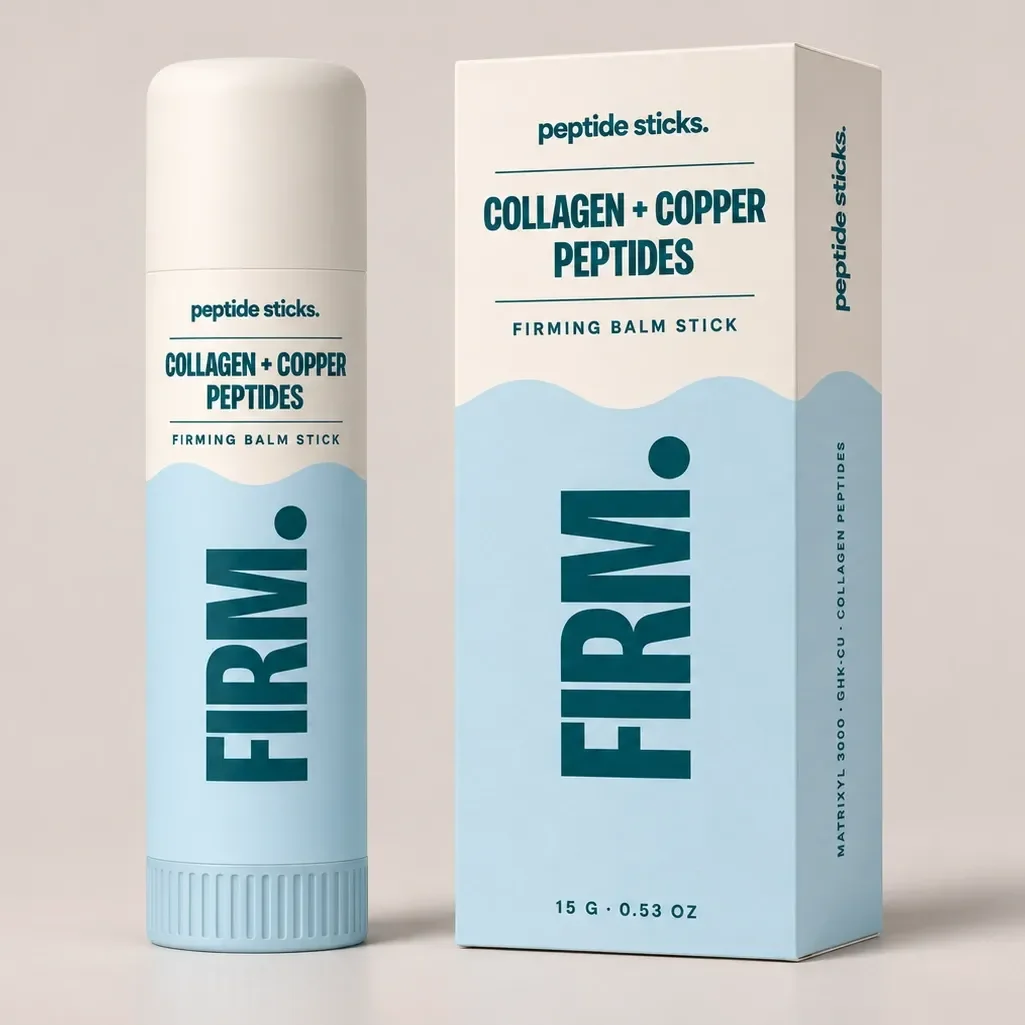
The Korean “collagen stick” trend fits this routine too: a balm stick is an easy way to put actives exactly on the jaw and neck. Compare the options in our collagen stick roundup.
When to see someone
For hollowing or real sagging, a board-certified dermatologist can talk through fillers, energy devices or surgery. If your skin hurts, burns or breaks out since starting a GLP-1, raise it with your prescriber. For more on skin during GLP-1 weight loss, see our GLP-1 skincare guide.
The bottom line
Peptides are a sensible, gentle way to help skin look smoother and firmer after fast weight loss. Choose named peptides like Matrixyl 3000 and GHK-Cu, wear SPF every day, and give it 8 to 12 weeks. Just don’t expect any topical to replace lost volume.