Why one name means two products
Supplement brands have sold collagen in single-serve “stick packs” for years: long, thin packets you tear open and pour into a drink. Skincare brands borrowed a different stick, the twist-up tube from lip balm and deodorant. Both contain peptides, so both get called peptide sticks, and Google shows both for the same search. That’s why the results for “peptide sticks” can look like a supplement aisle with a few skincare products mixed in.
The skincare kind
A skincare peptide stick is a solid formula in a twist-up tube. You swipe it straight onto the spots you care about, such as the forehead, smile lines, jaw and neck, so there’s no dropper and nothing to spill. Some are rich and cushiony, sold as peptide balm sticks. Others are lighter and settle fast, sold as peptide serum sticks. The difference is finish, not strength; we compare them in balm stick vs. serum stick.
What matters more is which peptides are inside and how high they sit on the ingredient list. Some sticks are built around peptides. Others are moisture balms or tinted sunscreens with a peptide added. Both can be good products, but they do different jobs.
The drink kind
Collagen peptide stick packs hold hydrolyzed collagen, which is collagen broken into small protein fragments so it dissolves. A packet usually holds around 10 g. You stir it into water, coffee or a smoothie, and your body digests it like other dietary protein.
Several small randomized trials report better skin hydration and elasticity after 8 to 12 weeks of daily collagen. A 2025 review of those trials in The American Journal of Medicine found the benefit showed up in studies funded by supplement makers and not in the independent ones. So the evidence is mixed. If you want to try a supplement, choose one with third-party testing and check with your doctor first.
Do skincare peptide sticks work?
The stick doesn’t change what a peptide does; it changes how easy it is to use every day. The peptides with the most research for firmer-looking skin are Matrixyl 3000 and GHK-Cu, with results showing up over 8 to 12 weeks of daily use. Results are real but modest. Peptides support the look of firmer, smoother skin. They don’t replace sunscreen, retinoids or a dermatologist. We go through the studies in do peptides work?
How to judge any peptide stick
Named peptides: look for INCI names like Palmitoyl Tripeptide-1 or Copper Tripeptide-1, not just “peptide complex”.
Position: peptides before the preservatives, not after.
Base: one that holds its shape in a warm bag.
Extras: fragrance and essential oils if your skin is sensitive.
Where it goes: what the brand says it’s made for, eyes and lips included.
Peptide sticks for hair
“Peptide sticks for hair” usually means collagen drink packets marketed for hair and nails. Evidence for hair is thin. Skincare peptide sticks are made for the face and neck, not the scalp. If your hair is thinning, a dermatologist can find the cause and point you to treatments made for that job.
The bottom line
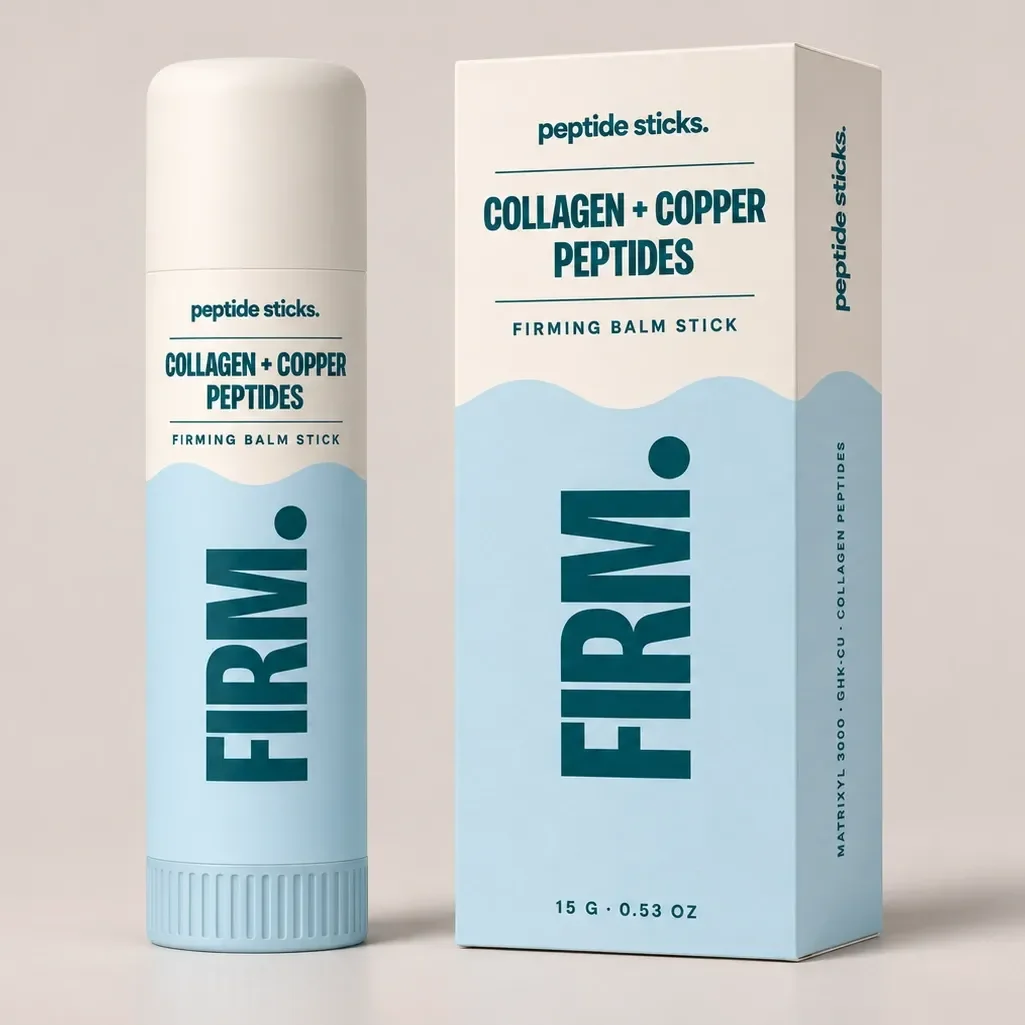
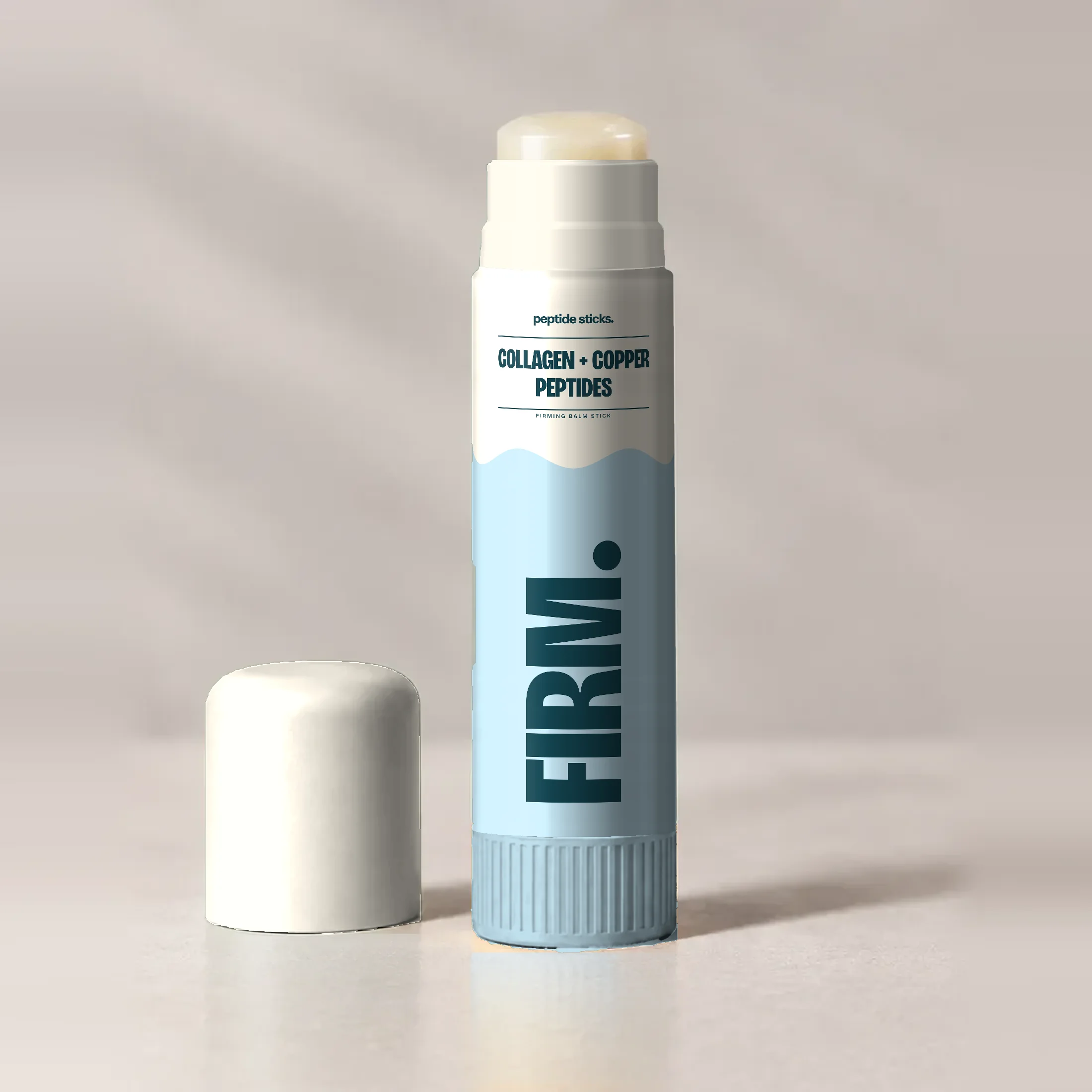
If you want something you can see and feel on your skin, pick a skincare peptide stick that names its peptides near the top of the list, and use it daily for at least eight weeks. If you’re curious about the drink kind, treat it like any supplement: third-party tested, doctor approved, and with modest expectations. Our own peptide stick, the Collagen + Copper Stick, is the skincare kind, built around Matrixyl 3000 and GHK-Cu.