What a peptide serum is
A serum is the thin, concentrated layer in a routine. It goes on after cleansing and before moisturizer, so its actives meet skin first. A peptide serum is one built around peptides: short chains of amino acids that skin already knows how to read. Most are water-based liquids in a dropper or pump bottle. Some now come as solid serum sticks.
The four kinds of peptides in serums
Signal peptides, such as Matrixyl 3000, prompt skin cells to make more collagen in lab studies. They’re the usual pick for firmness and fine lines.
Carrier peptides, such as GHK-Cu, carry trace minerals like copper that skin uses as it renews. This is what a copper peptide serum is built around.
Neurotransmitter-modulating peptides, such as Acetyl Hexapeptide-8, are sold for softer-looking expression lines. Effects are modest.
Calming and supporting peptides, such as Palmitoyl Tripeptide-8, are used for redness and reactive skin.
Most serums blend two or more. We go through each one in what are peptides?
What the research shows
Matrixyl 3000 and GHK-Cu have the deepest record: small clinical studies showing firmer, smoother-looking skin over 8 to 12 weeks of daily use. The changes are real and modest. Peptides won’t match a retinoid for texture or a procedure for lift, and they don’t replace sunscreen. Their strength is that they’re gentle enough to use every day, alongside everything else. More in do peptides work? and peptides vs. retinol.
Where it goes in your routine
Morning: cleanse, vitamin C if you use it, a peptide serum without copper, moisturizer, sunscreen.
Night: cleanse, peptide serum (copper peptides are best here), retinoid if you use one, moisturizer.
Thinnest to thickest is the rule. Give each layer a moment to settle so the next one doesn’t pill.
How to read a peptide serum label
Look for: INCI names such as Palmitoyl Tripeptide-1, Palmitoyl Tetrapeptide-7 or Copper Tripeptide-1.
Check: that they come before the preservatives, not after.
Be wary of: “peptide complex” with no names, and fragrance if your skin is sensitive.
Compare: price per mL or per gram, not per bottle.
Serum, cream or stick?
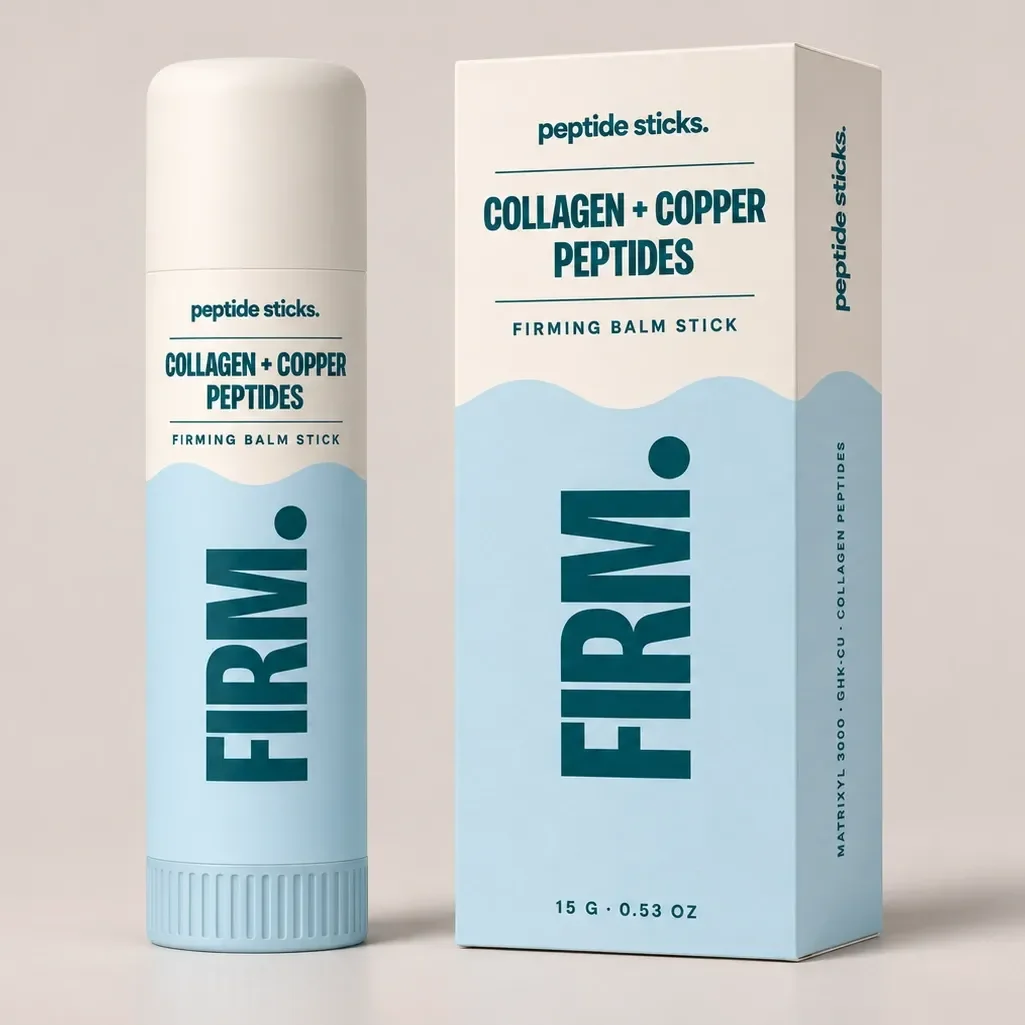
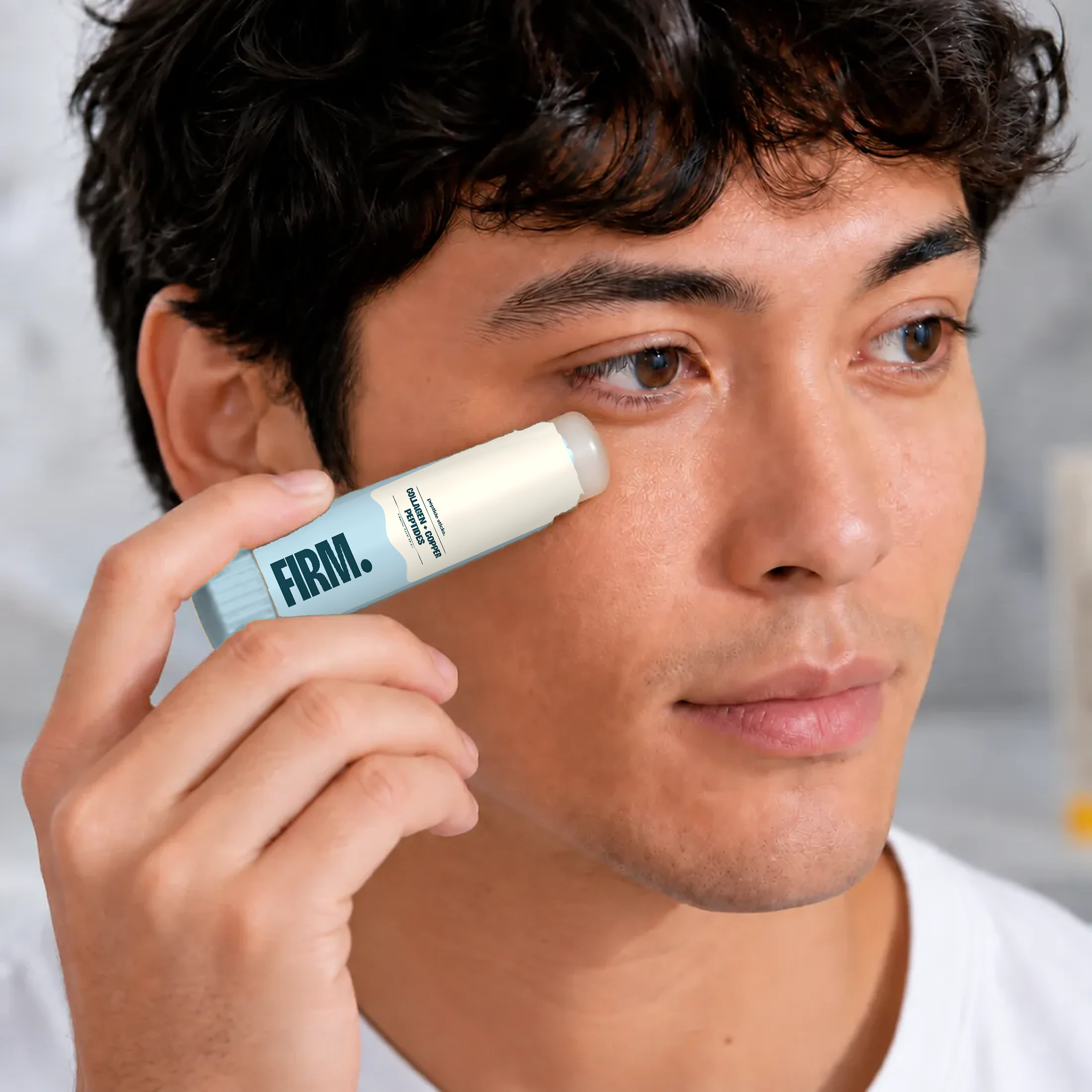
A peptide serum is light and layers under everything. A peptide cream adds moisture in the same step. A stick puts the serum step in a solid you swipe on, so it travels without a liquid limit and goes exactly where you want it. The peptides are the same; pick the format you’ll use every day. If your concern is the jaw, neck or smile lines, a stick is the easiest way to keep it to those spots. That’s why we made our peptide stick.
The bottom line
A good peptide serum names its peptides, puts them high on the list, and suits your concern: Matrixyl 3000 or GHK-Cu for firmness, Palmitoyl Tripeptide-8 for redness, Acetyl Tetrapeptide-5 for puffiness. Use it after cleansing and before moisturizer, every day, for at least eight weeks, and keep copper peptides away from strong vitamin C.